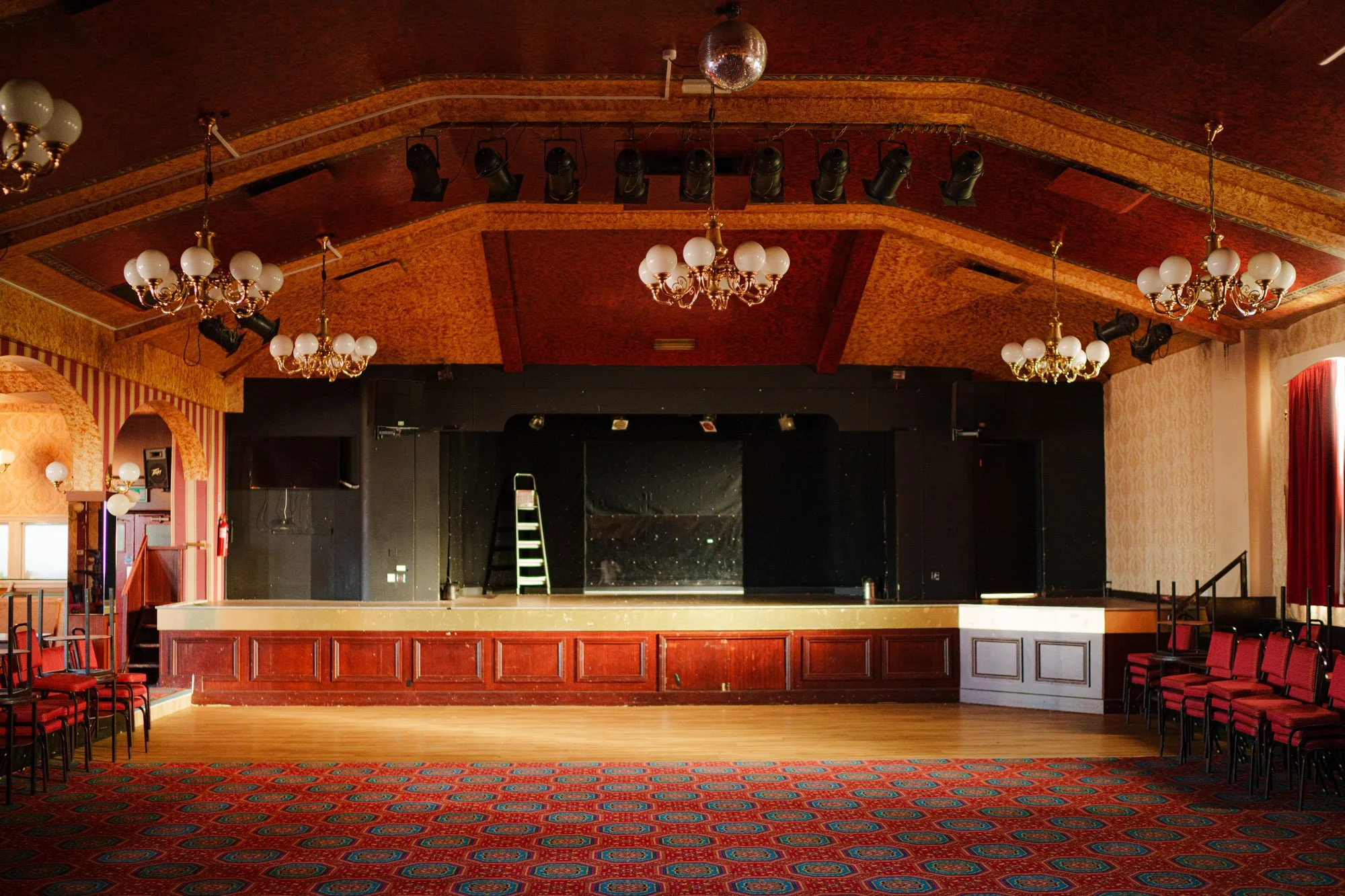
Firth Park W.M.C
An ongoing personal project exploring masculinity, place and belonging in Sheffield.
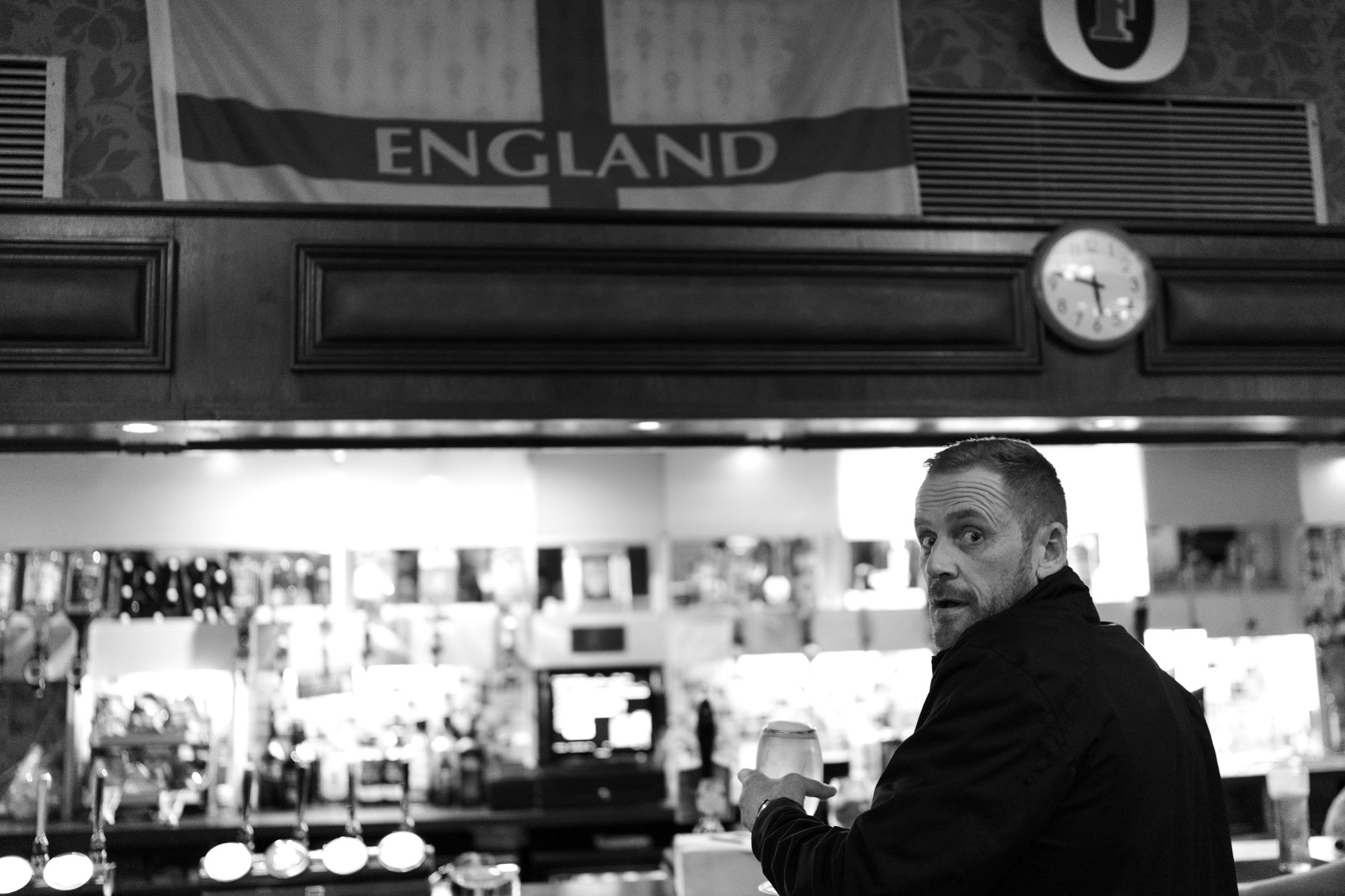
In 2025 I started thinking about masculinity in Sheffield. I was reading about the city's industrial past, working men's clubs and the relationship between work, class and ideas of what it meant to be a man here. But there is only so much I can understand by reading about something. A big part of how I work is putting myself into a space, meeting people and experiencing it for myself. That curiosity eventually led me to Firth Park Working Men's Club.
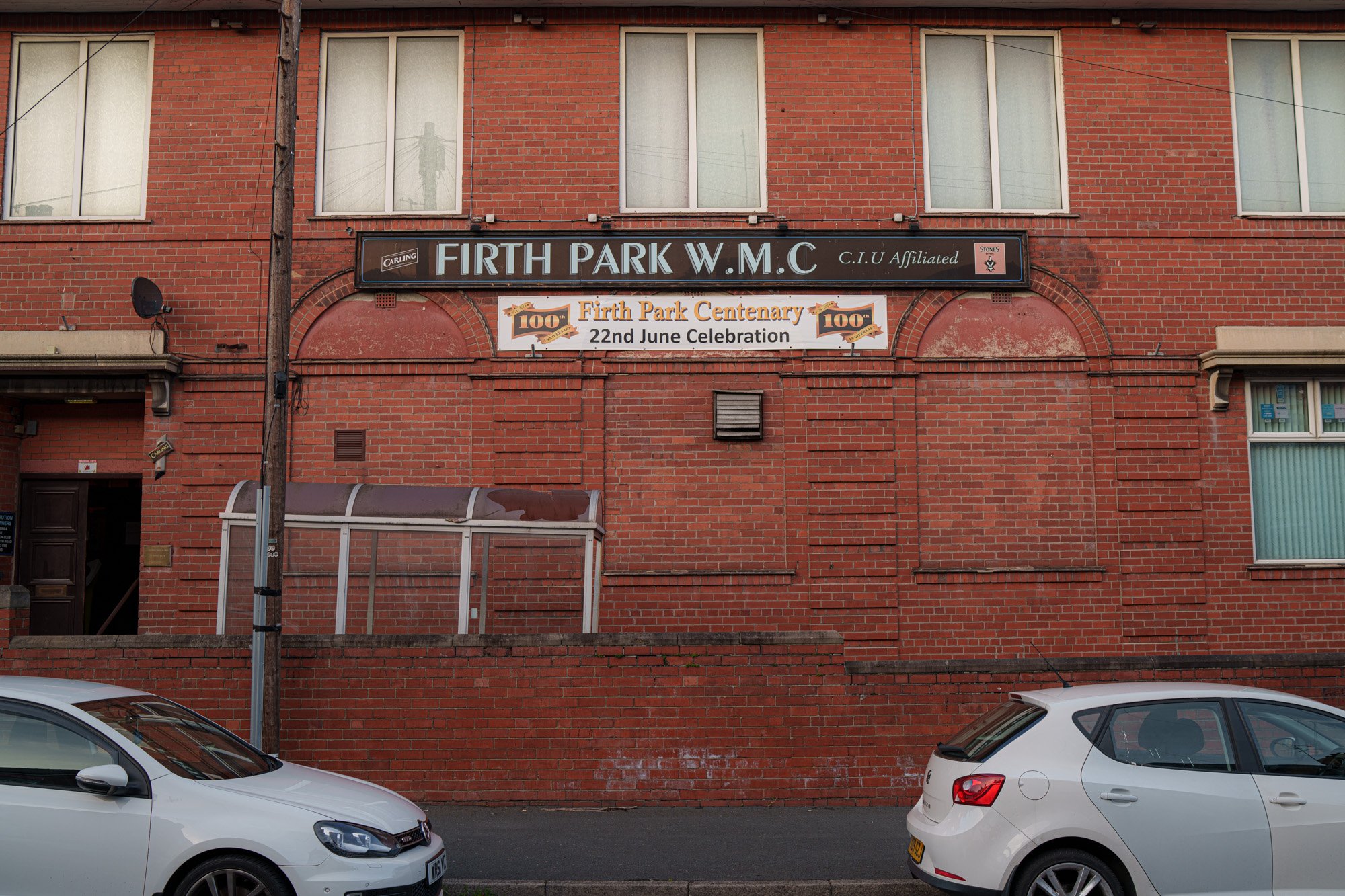
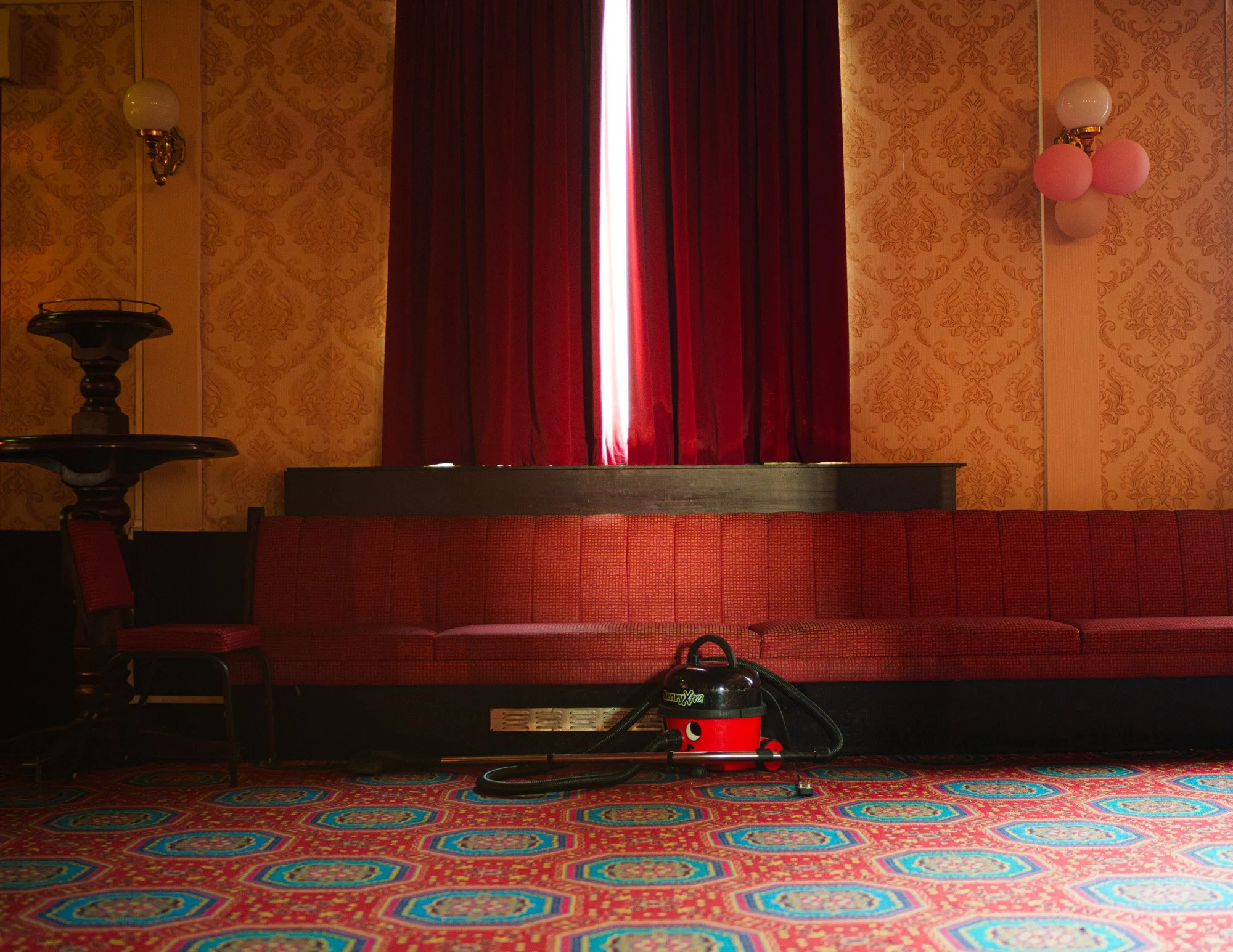
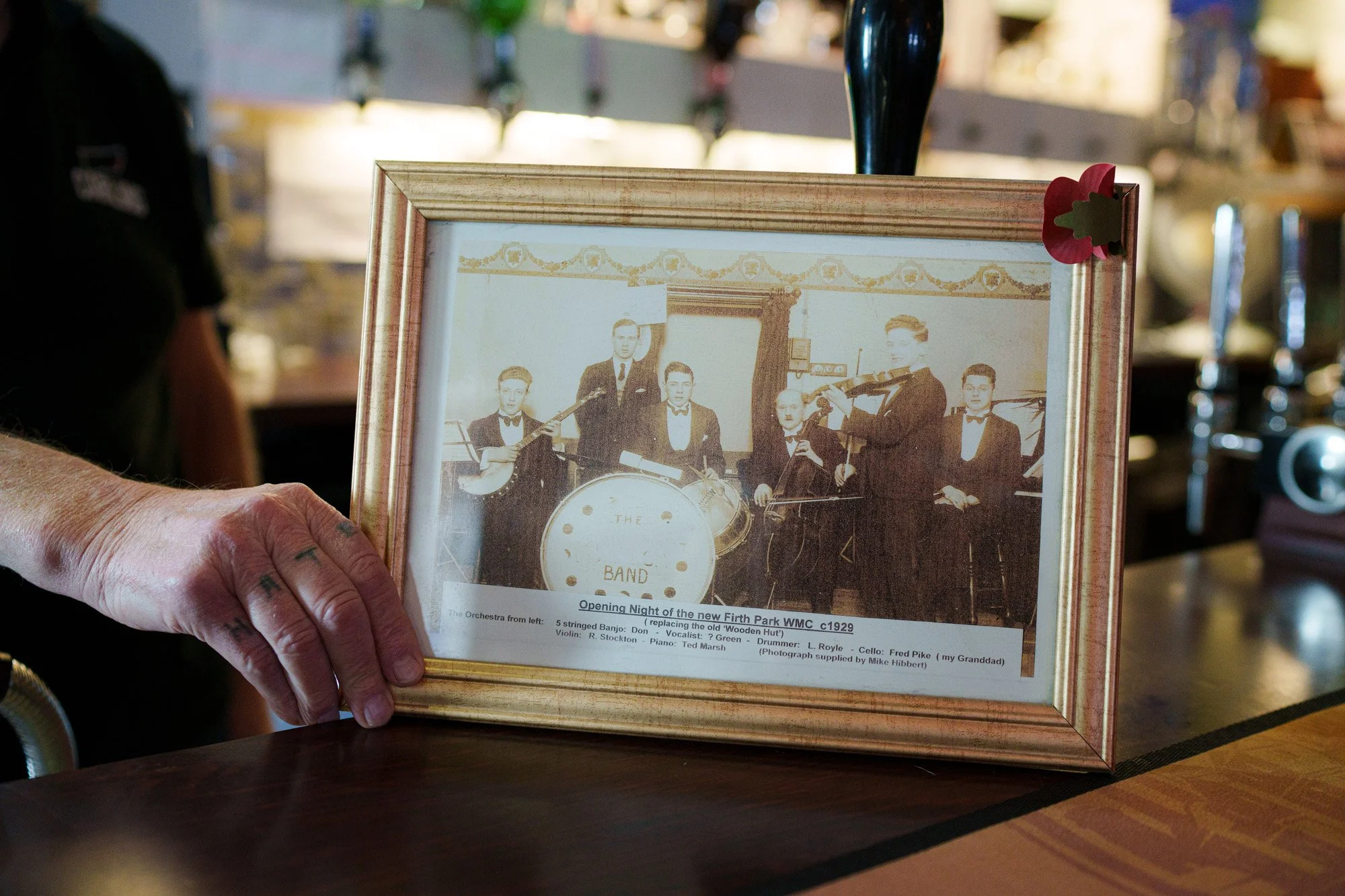
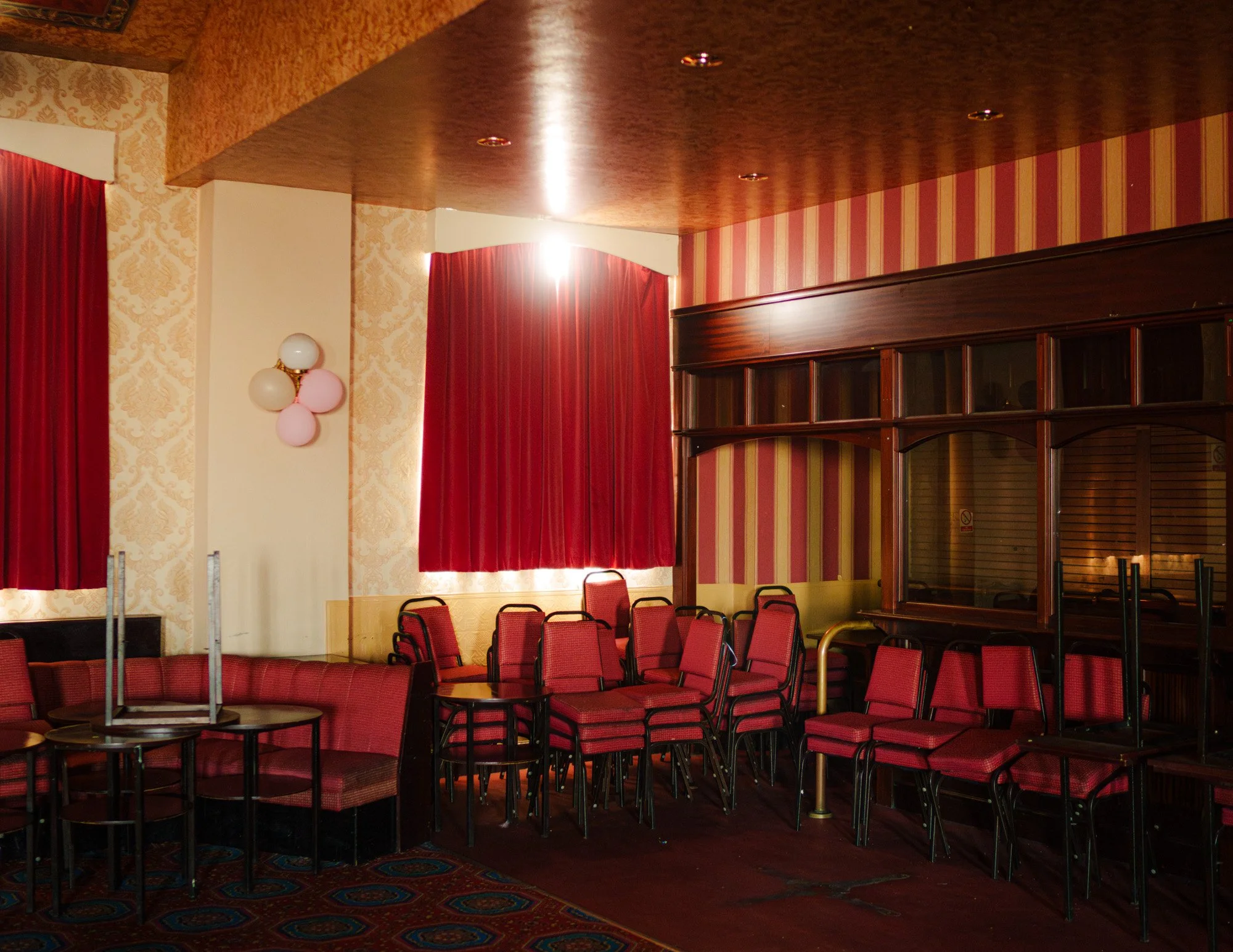
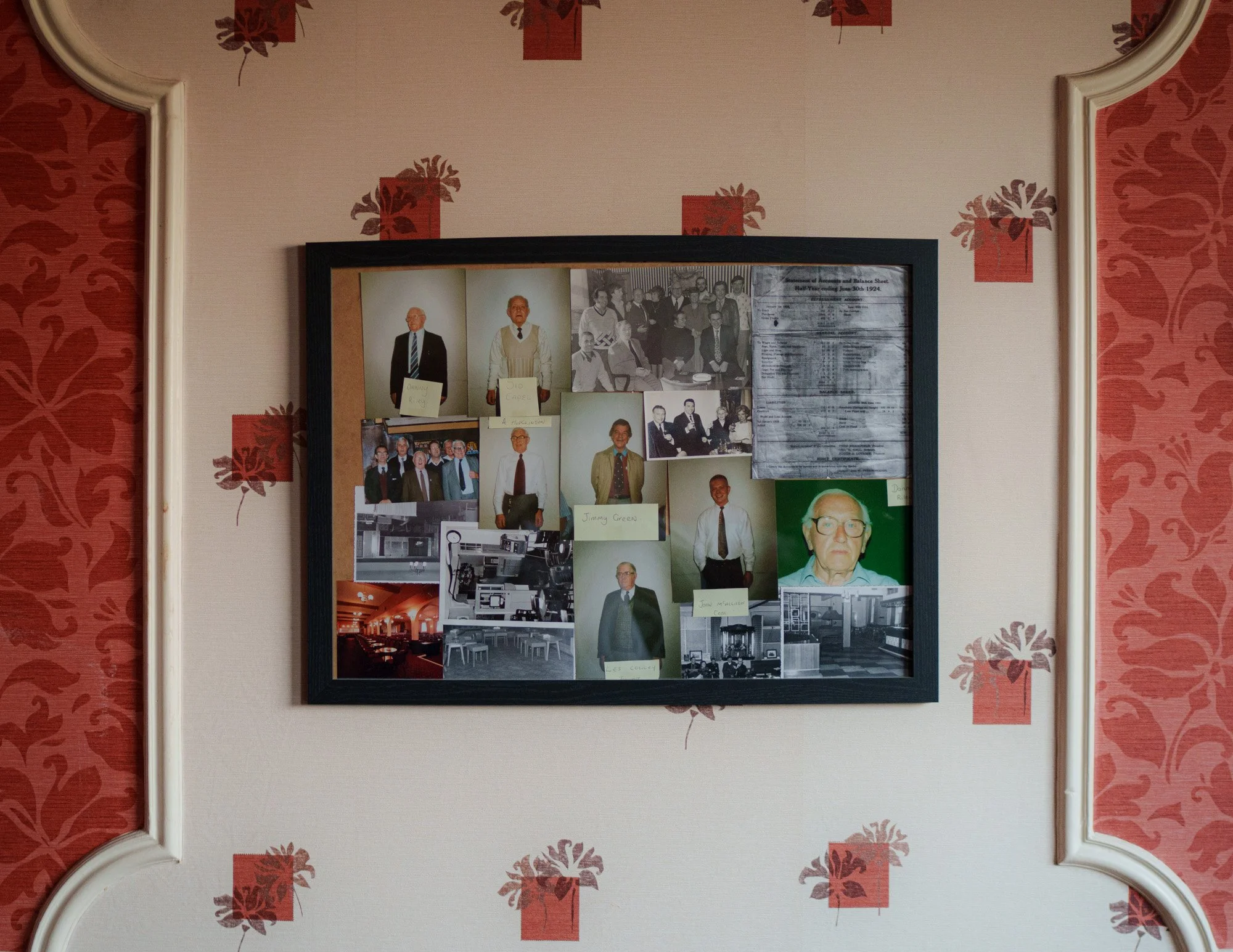
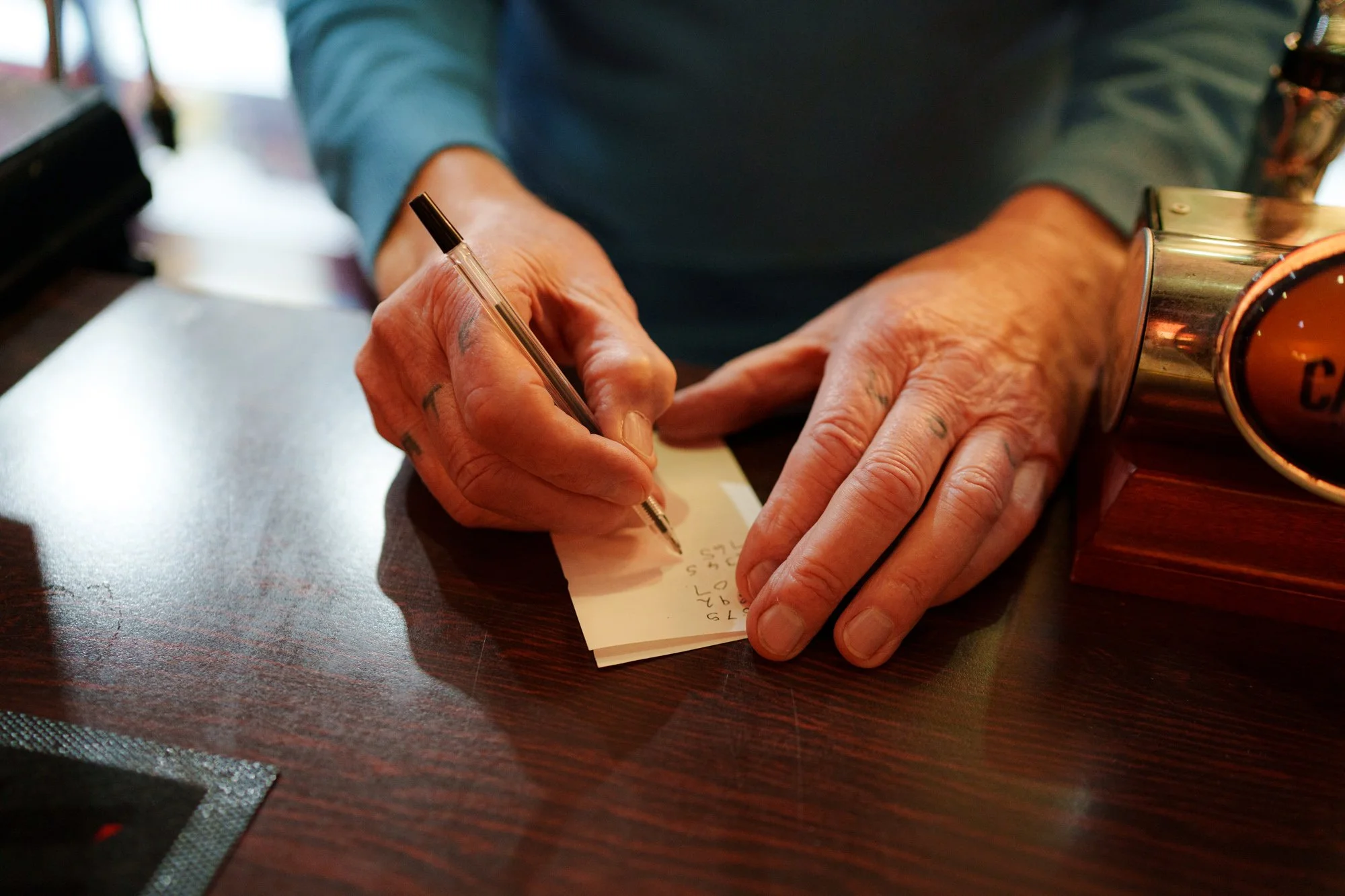
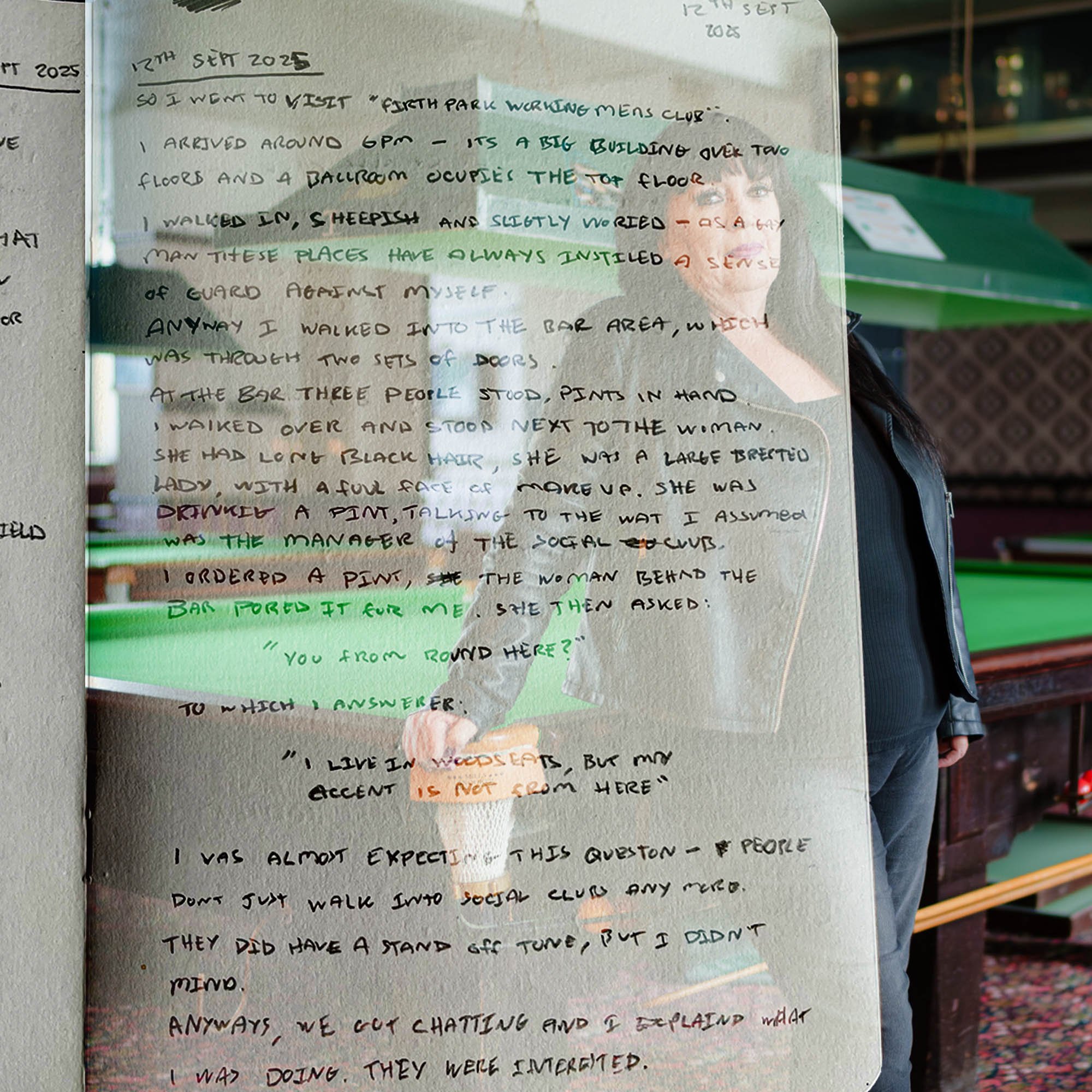
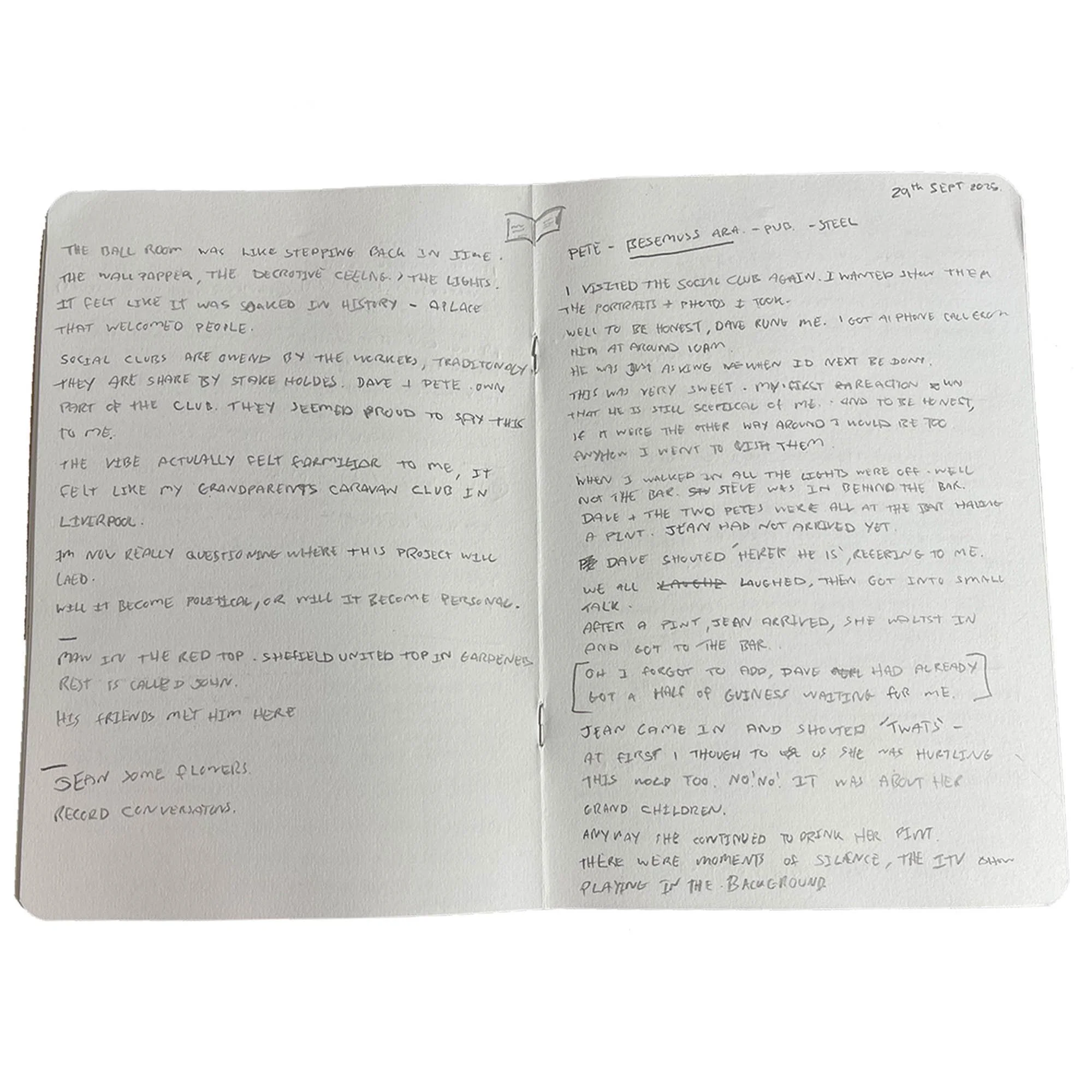
I first visited in September 2025. I arrived around 4pm feeling sheepish and slightly unsure of myself. As a gay man, I realised I had arrived with my own assumptions about what a working men's club might be like and how I might be received there. Part of this project has increasingly become about recognising those assumptions and allowing the experience of actually spending time with people to complicate them.
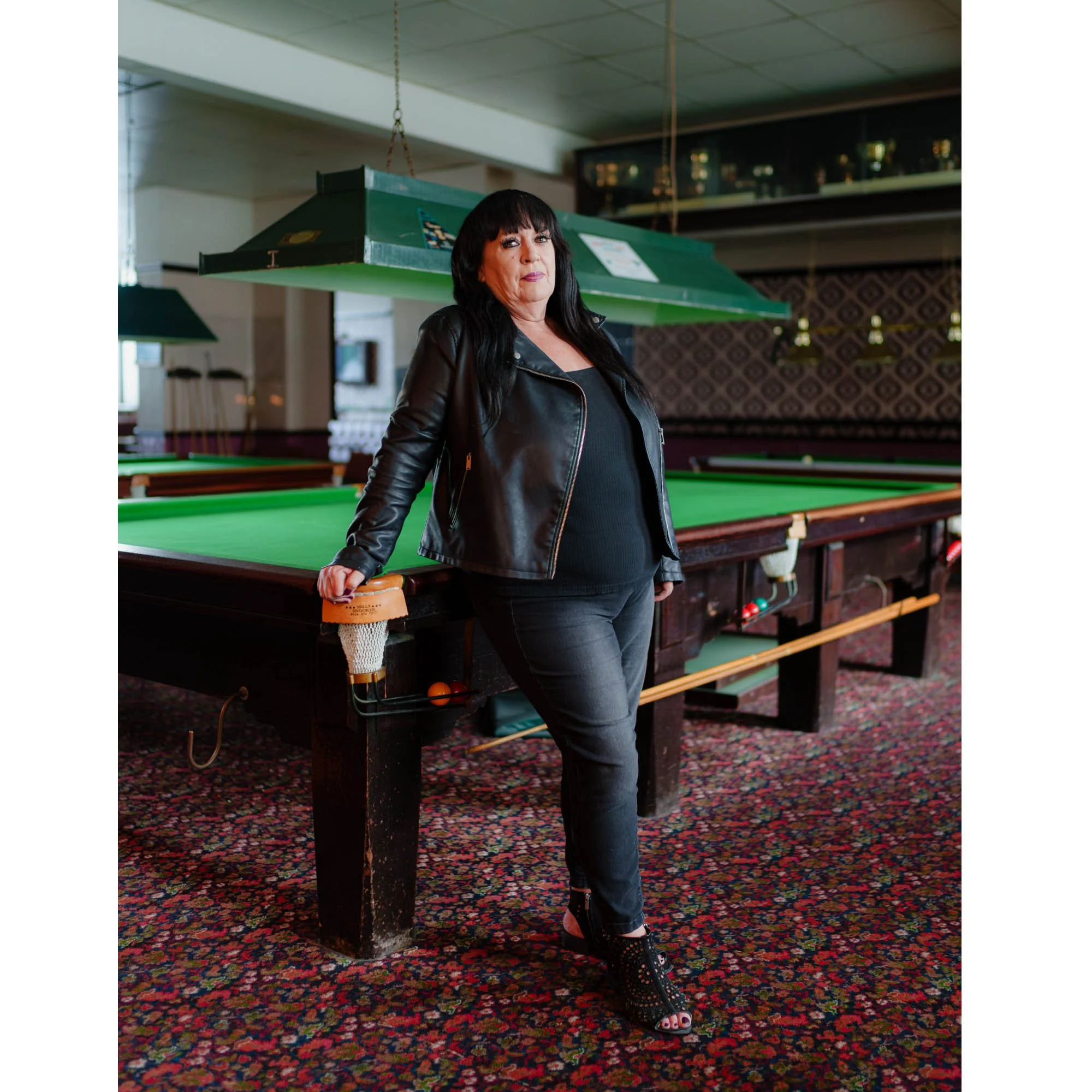
I walked up to the bar, ordered a pint and stood next to a woman called Jean. One of the first things she said to me was, “You're not from round here, are you?” She was right. We got chatting and I explained why I'd come in.
After a few visits, Jean quickly took me under her wing. The more time I've spent at Firth Park WMC, the less interested I've become in trying to find evidence of a particular kind of masculinity and the more interested I've become in the relationships, routines and contradictions that already exist there.
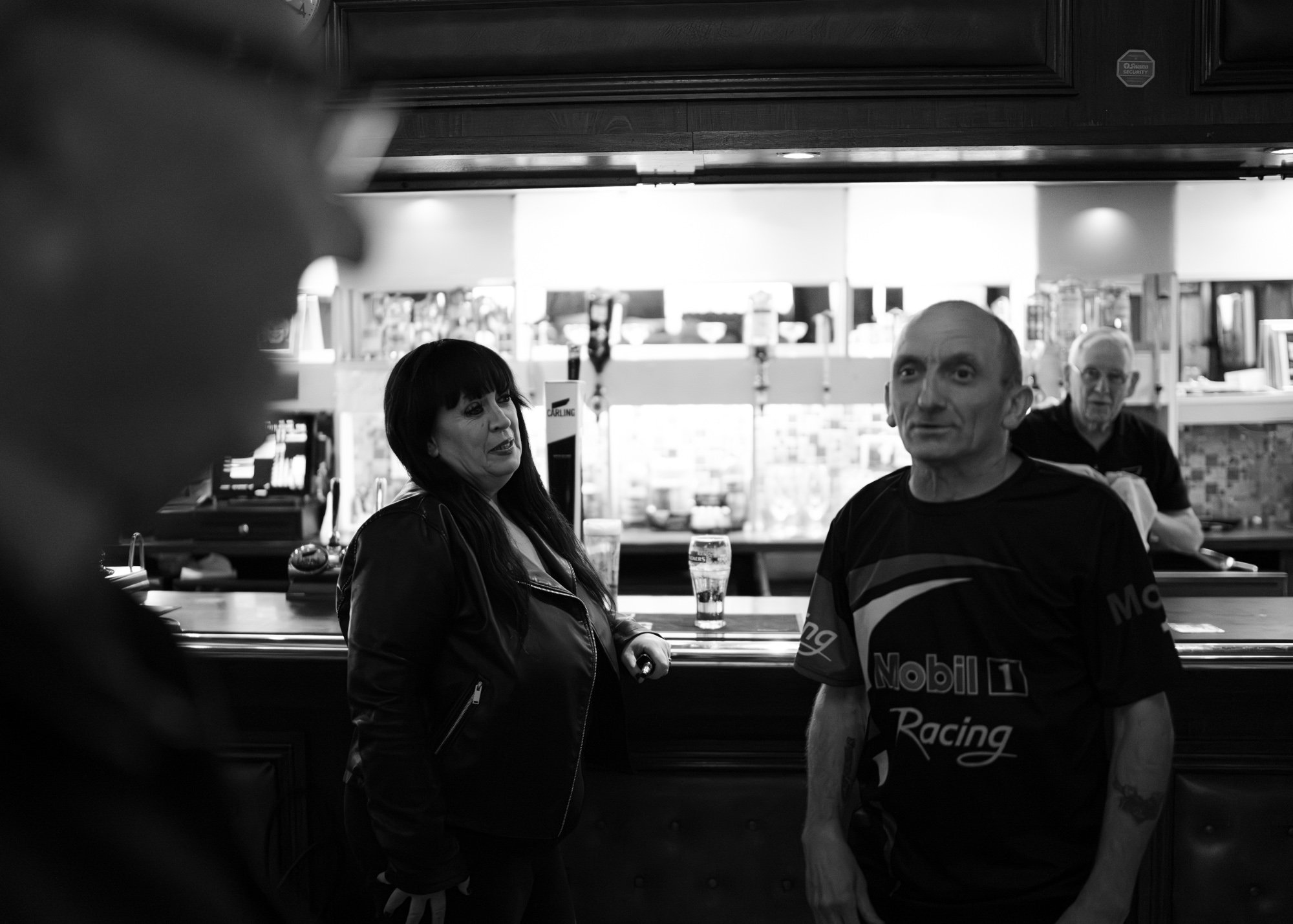
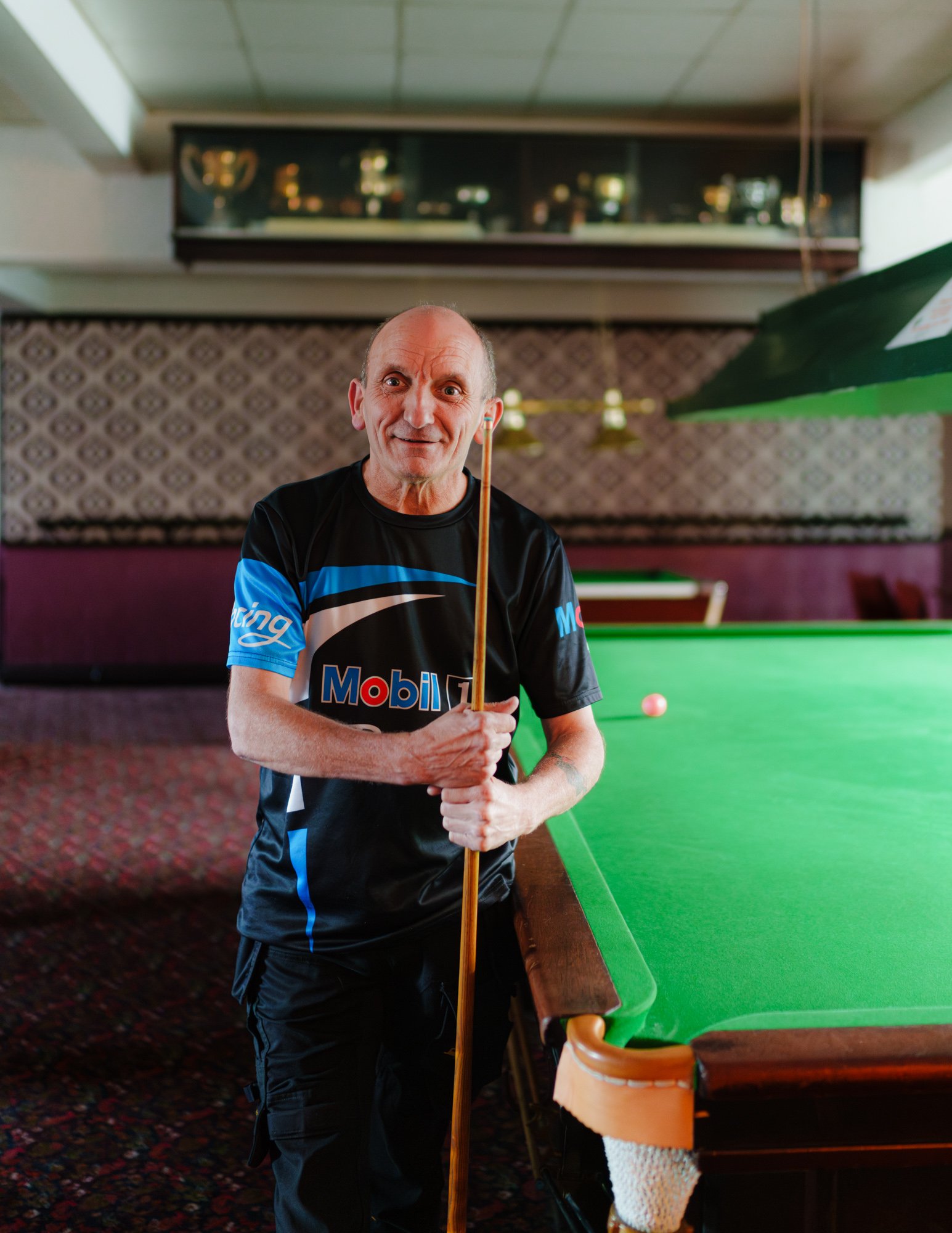
That became even clearer when I met Dean and Ross. They hadn't seen each other for around fifteen years and were about to play a game of pool. I wanted to go over and speak to them but, before I did, Jean said, “Would you like me to come with you? I've got your back.” I told her I was fine, but thanked her for thinking of me.
I've thought about that small exchange quite a lot since. I'd entered the club thinking about masculinity and perhaps expecting that to mean paying particular attention to the men in the room. Yet one of the people who immediately shaped my experience of the place was Jean. She knew everyone, seemed completely at ease in the space and, very quickly, made me feel that somebody was looking out for me.
Moments like this have gradually changed the way I'm approaching the project. I'm becoming less interested in trying to define masculinity from the outside and more interested in what happens when I spend time in a place: who looks after whom, how friendships are performed, where vulnerability appears and how my own expectations change through getting to know people.
I went over to Dean and Ross myself and started talking to them. They were curious about what I was doing, and I watched them play pool for a while before asking if I could photograph them. There was a little pause and a glance between them before they agreed. They were working me out too.
That feels important to the way I work now. I'm not simply observing the club; my presence changes the situation too. The conversations, photographs and relationships that develop come from that exchange.
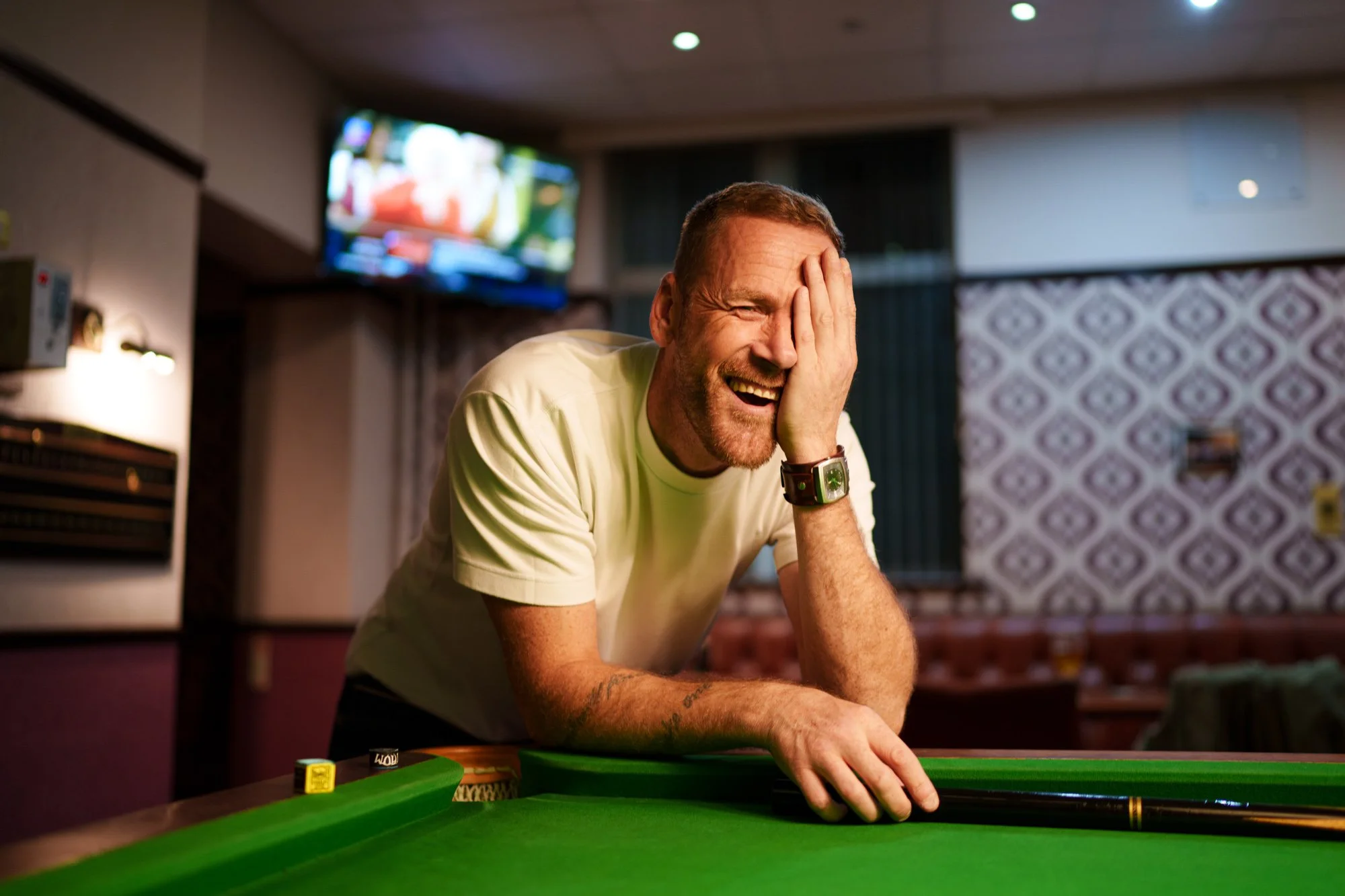
Ross was laughing while we had a chat about winning and losing.
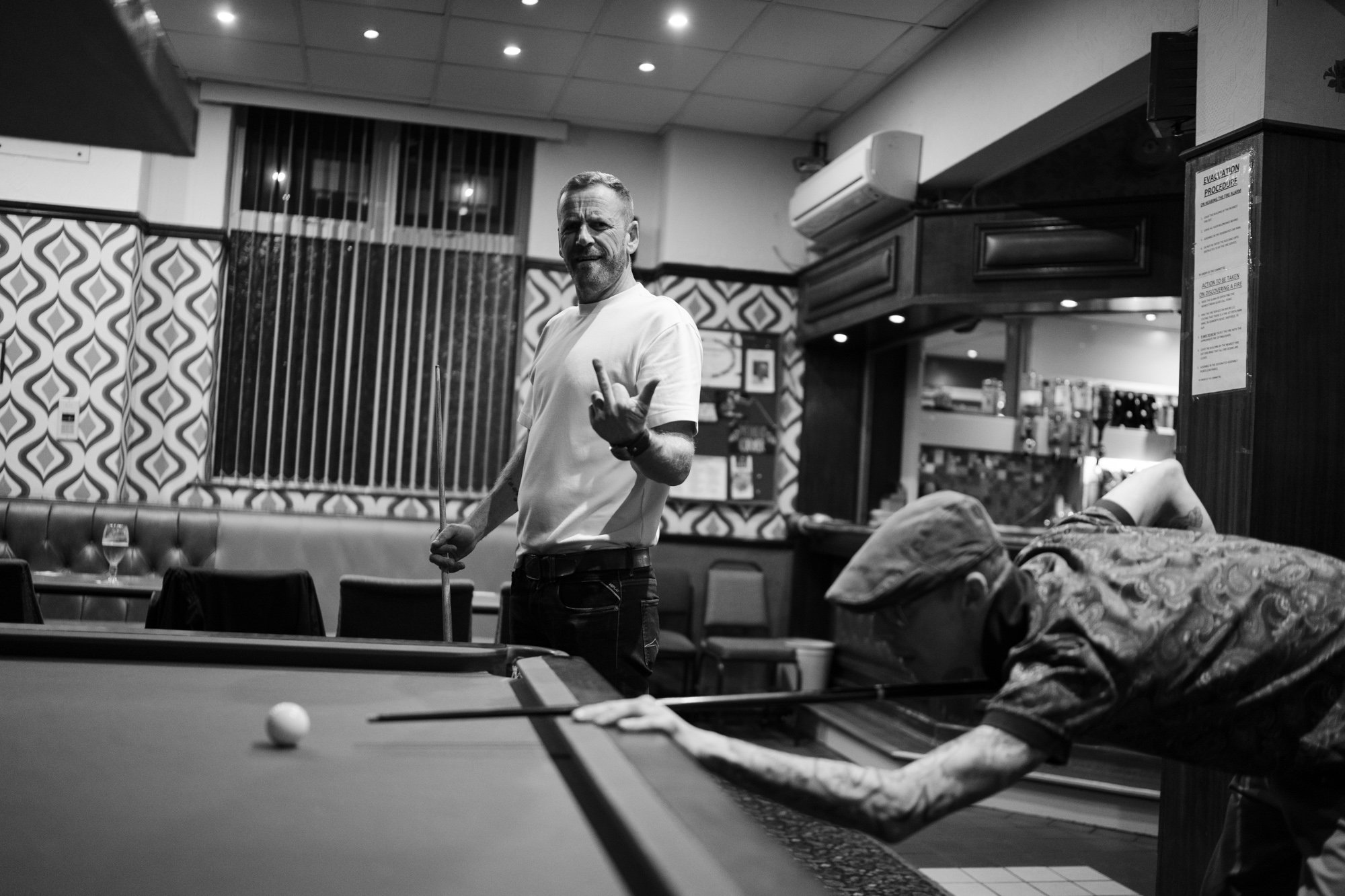
What keeps drawing me back are the smaller things. How people greet each other, who buys the next drink, the jokes, the taking the “piss” and the silent moments in between. Sometimes something more personal slips into a conversation before quickly moving on again.
The more time I spend at Firth Park WMC, the more I notice. There are friendships and routines around the bar and pool table that have clearly been there for years. I'm curious about what these small interactions might say about masculinity, but I don't want to put meaning onto everything I see. For now, I'm enjoying being there, getting to know people and noticing things I probably wouldn't have seen when I first walked through the door.
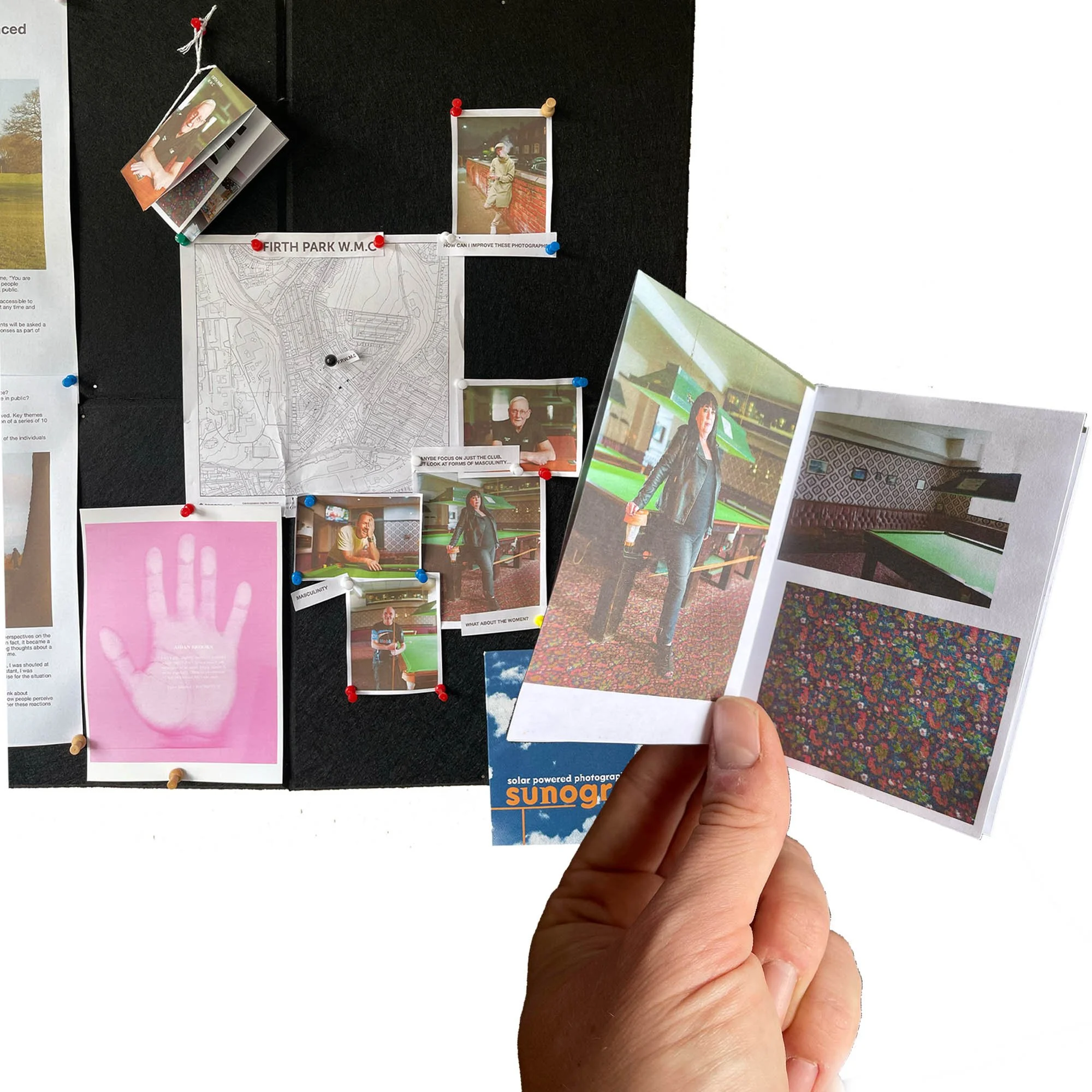
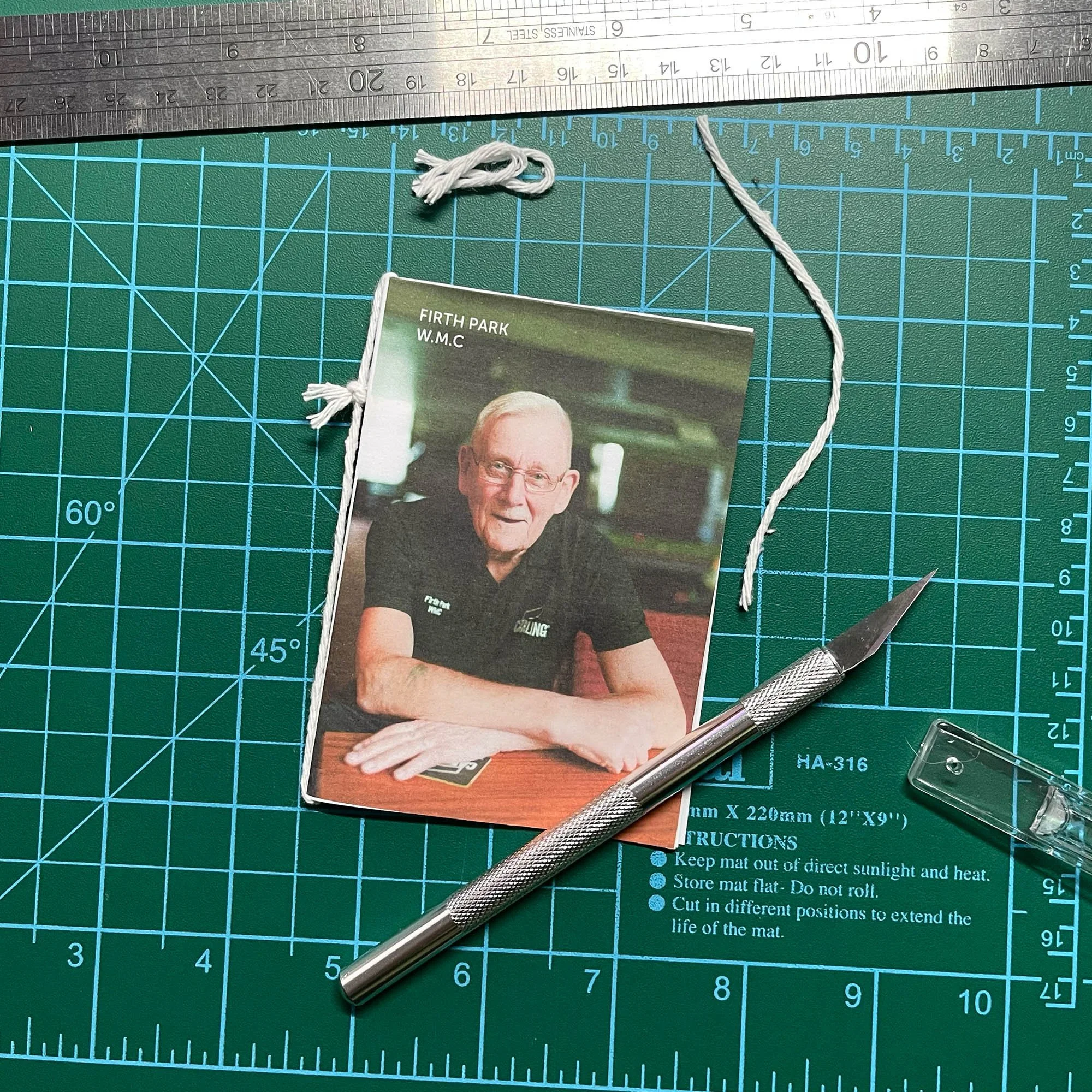
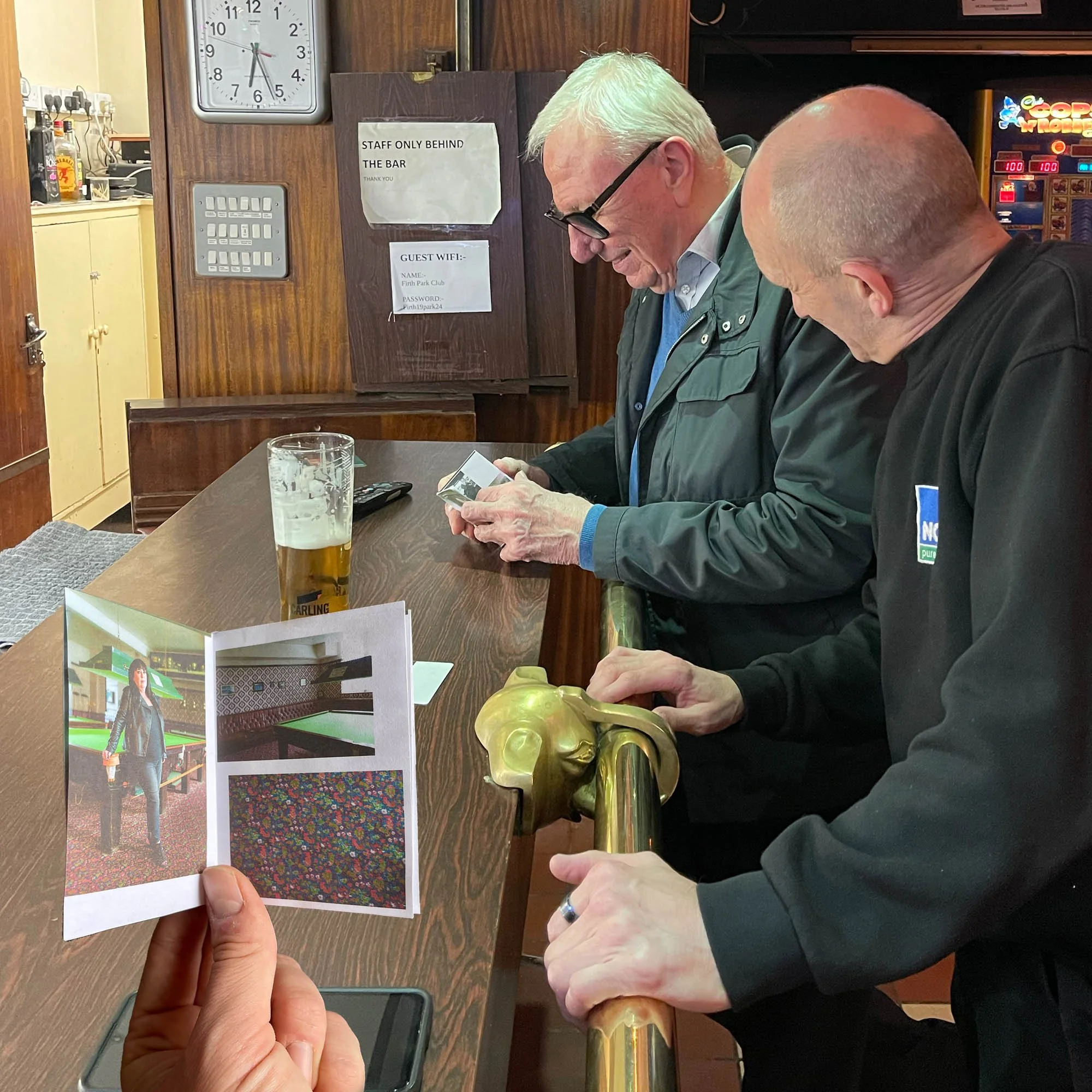
I’ve kept everyone I spoke with involved by making prints of the portraits for them and also experimenting with a mini zine, which went down a treat. I’m looking forward to where this leads.
Sidenote
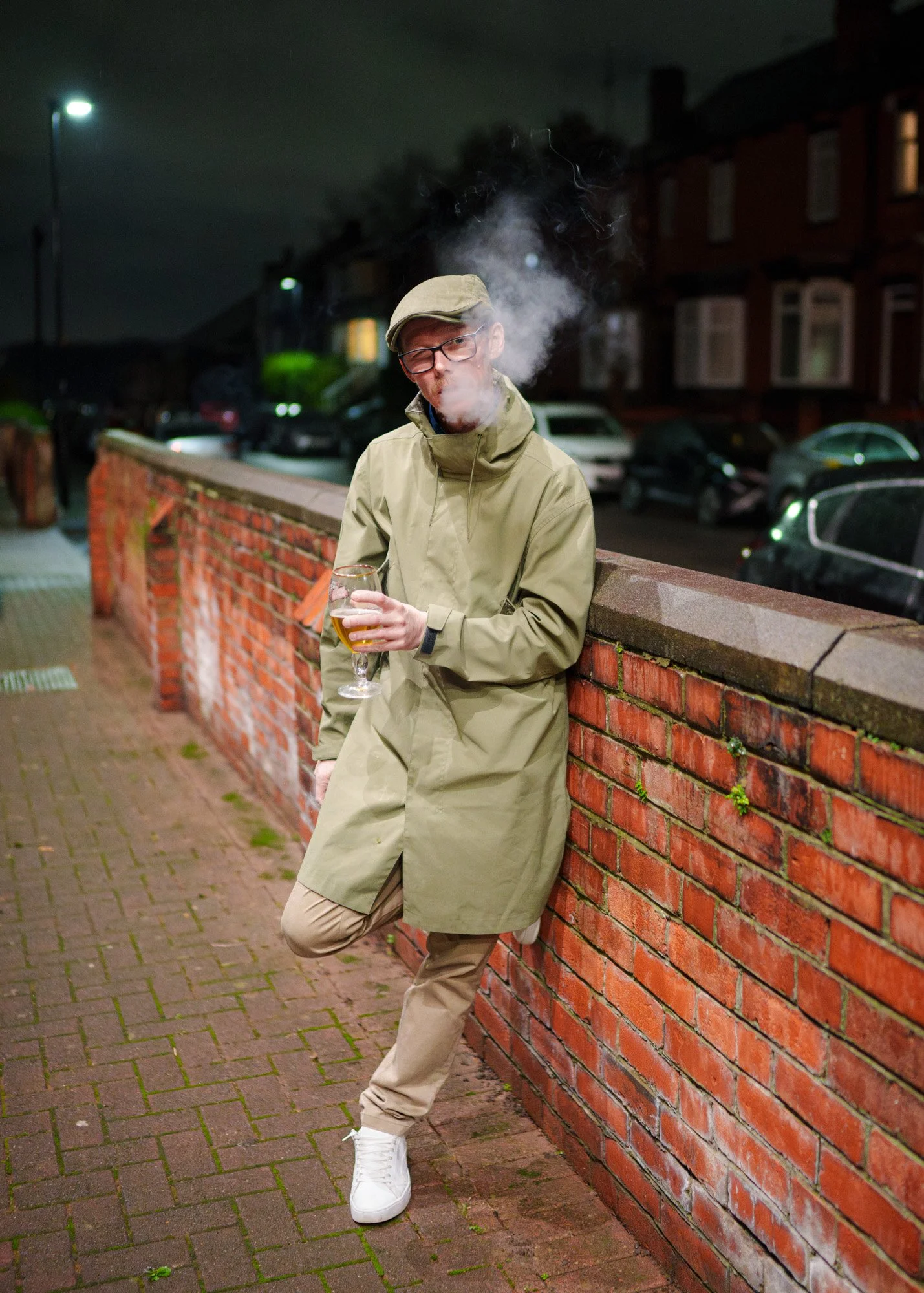
I believe photography can be used as an accessible and genuinely participatory research method because it places the people and communities being researched directly within the process. Rather than simply observing people from the outside, photography allows them to see what I am interested in and to become part of how that research develops. This feels particularly important in a world where cameras are everywhere and people can understandably be wary of being photographed. Jean once told me she didn't want her photograph on social media because she was worried she would be “trolled”. Those concerns shouldn't be treated as barriers to research, but as part of what we need to understand. For me, making a portrait is about much more than producing an image. The act of photographing someone creates a particular kind of human connection between photographer and subject: it involves conversation, trust, negotiation and being present with another person. I think there is real potential in using that relationship as a way of understanding communities, rather than treating photography simply as a means of documenting them.
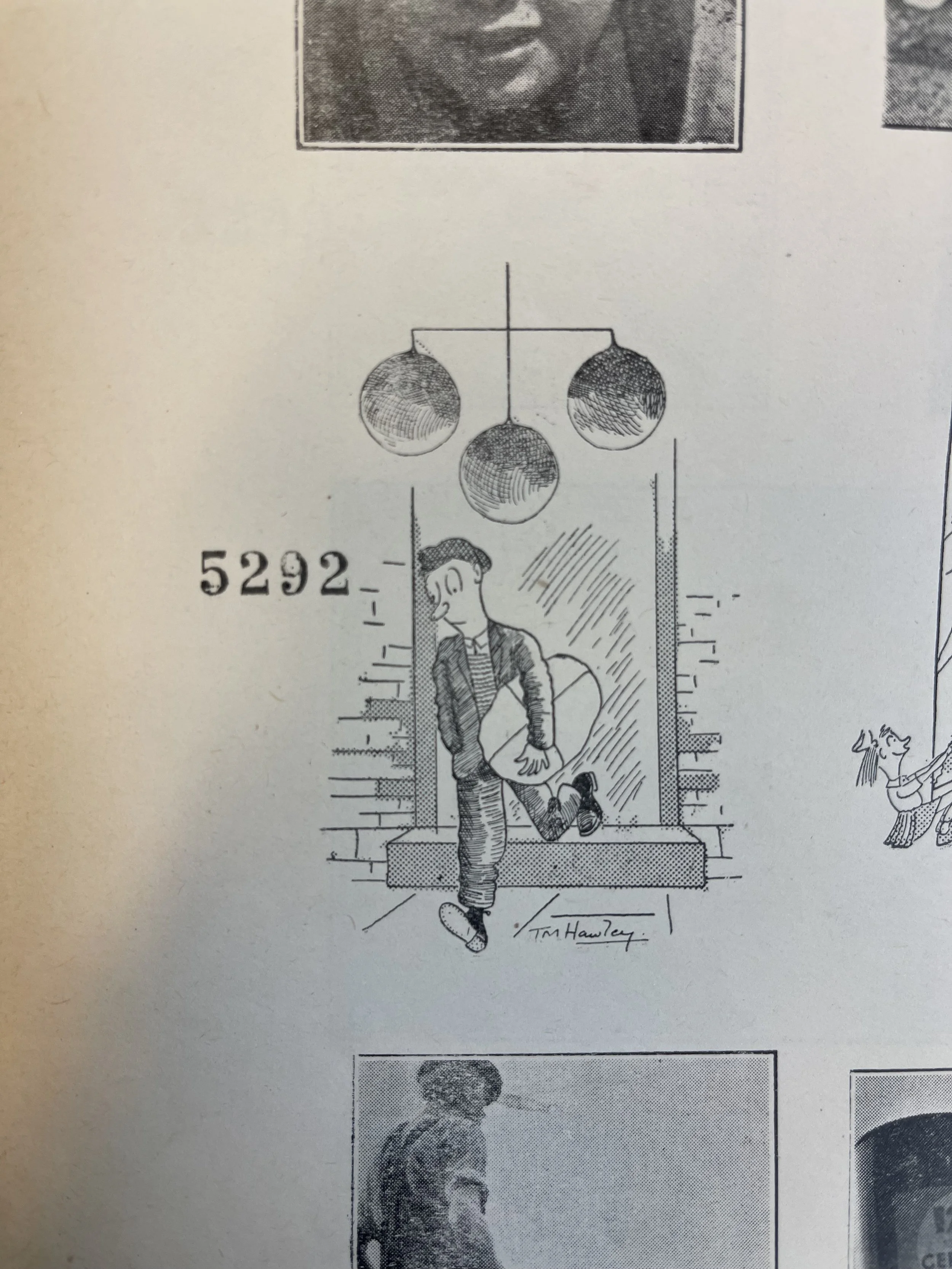
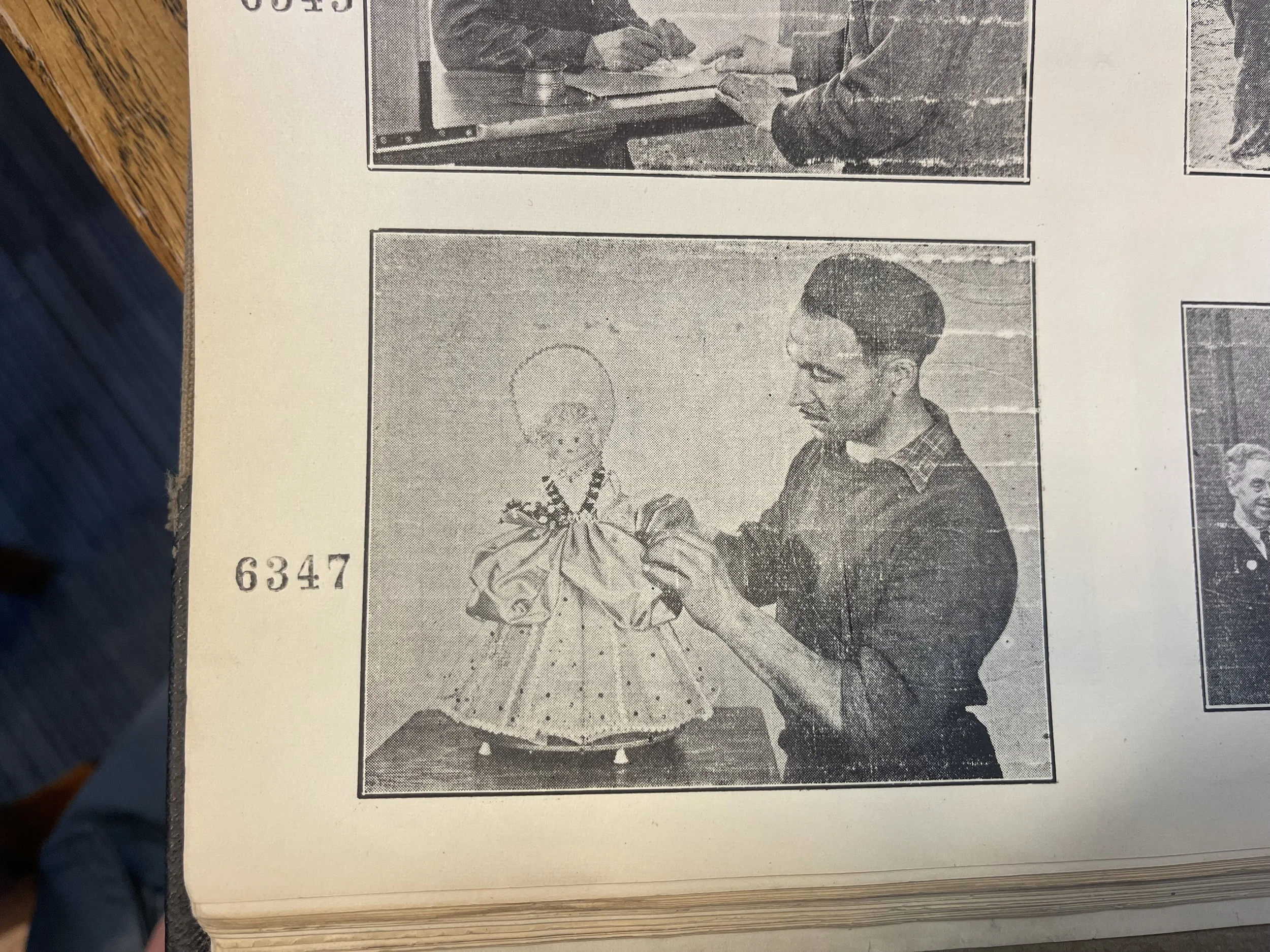
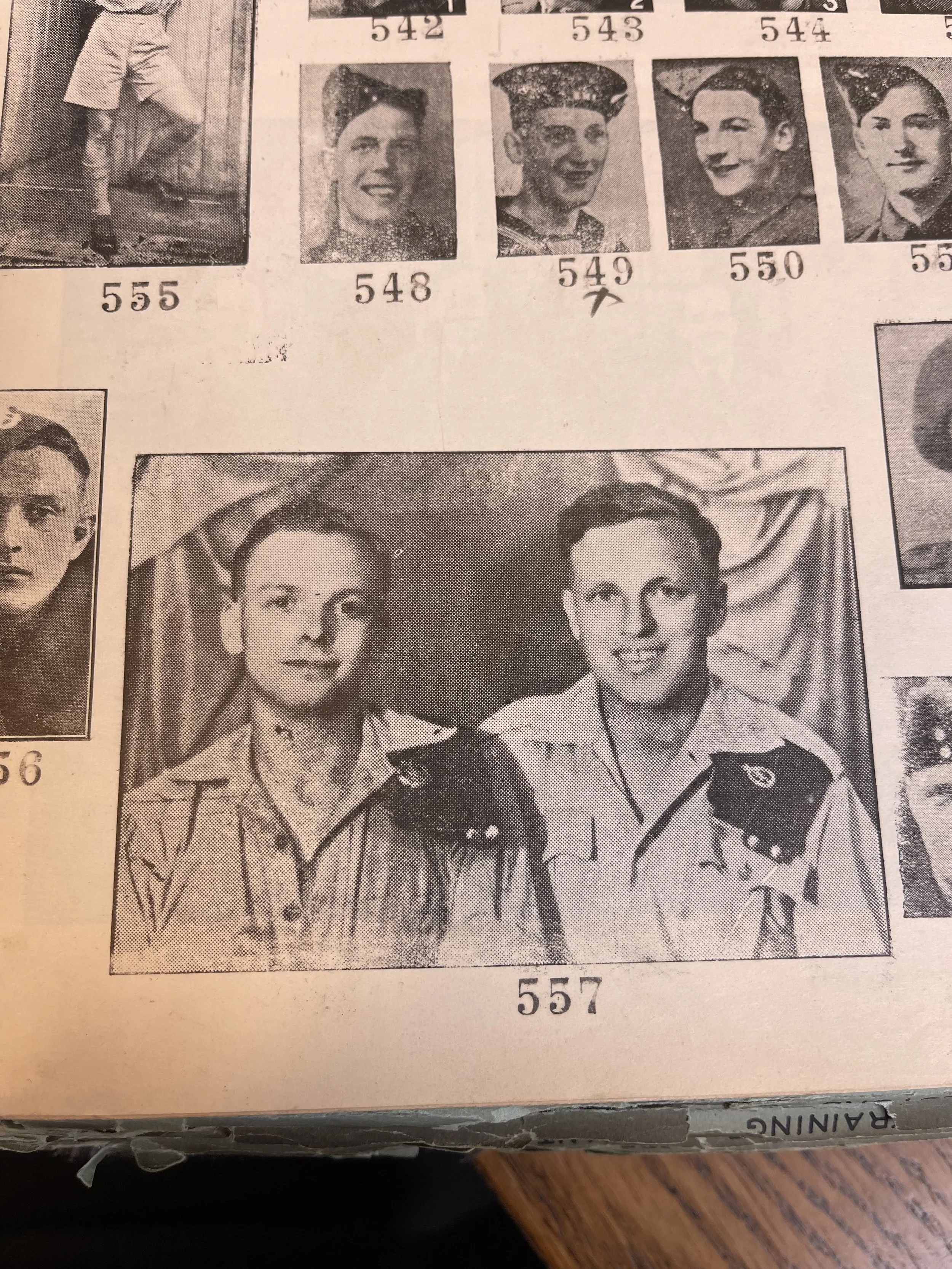
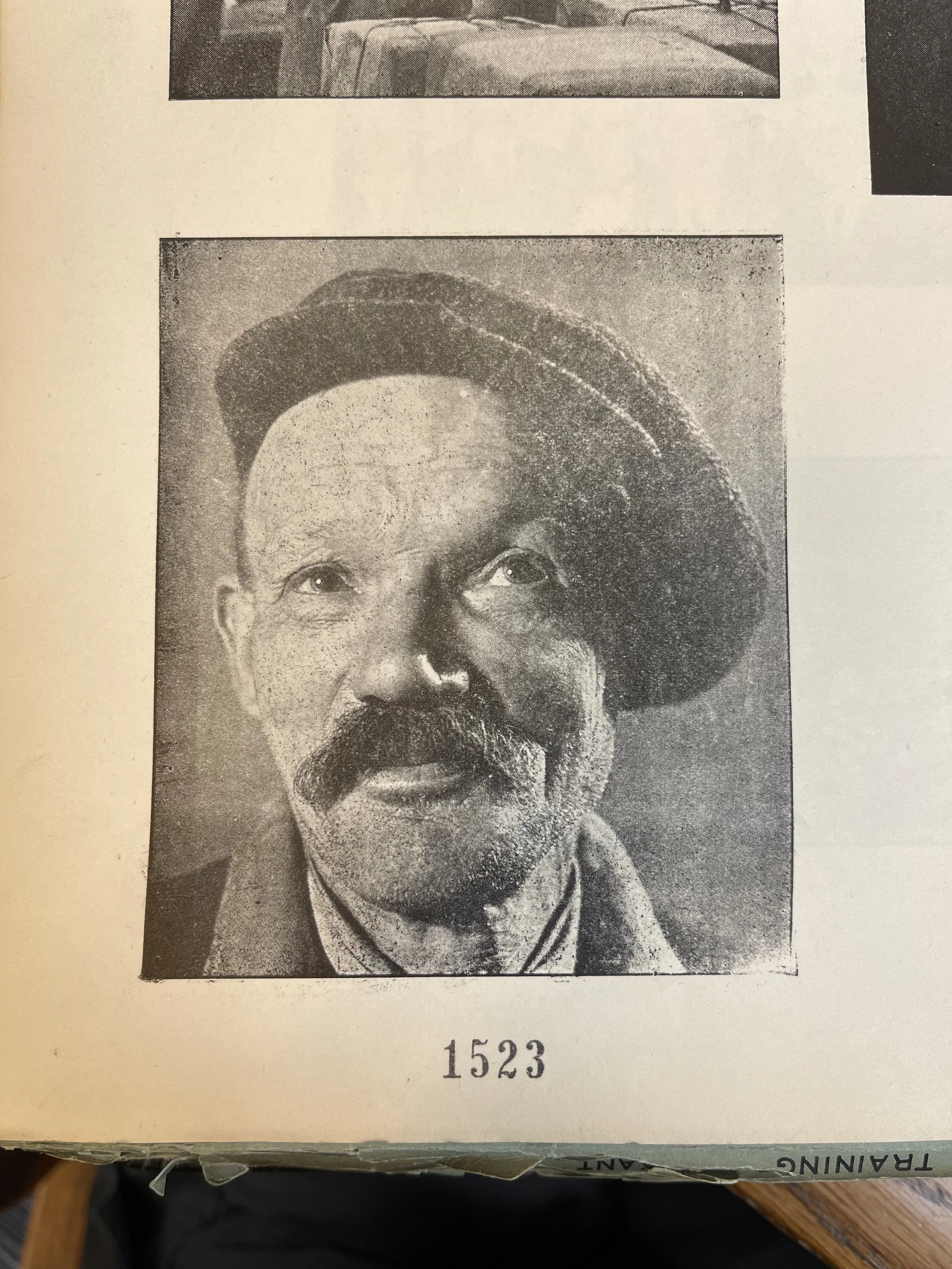
A photo book of Steel Works - Sheffield Local Libraries (338.4 SSTQ)
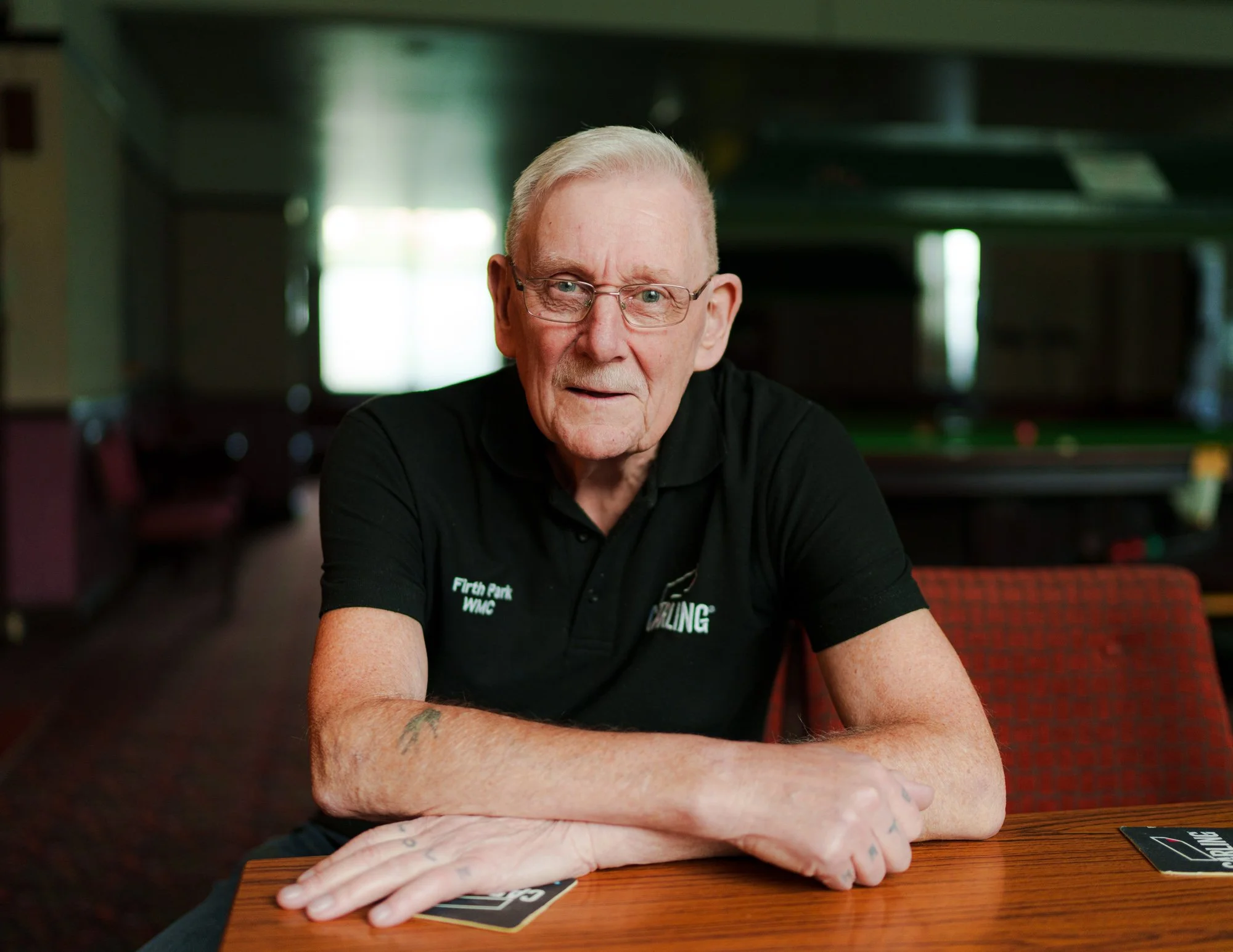
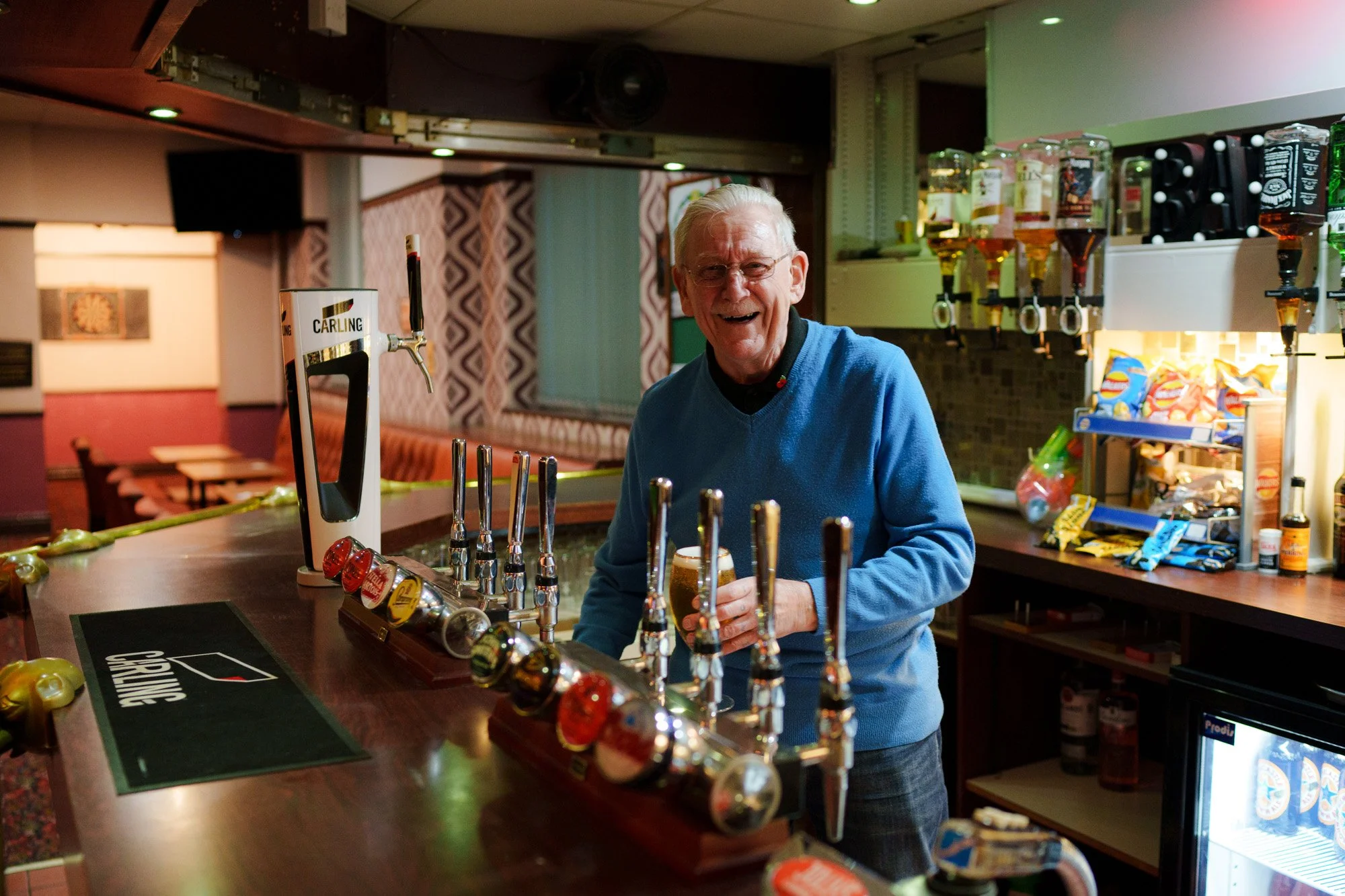
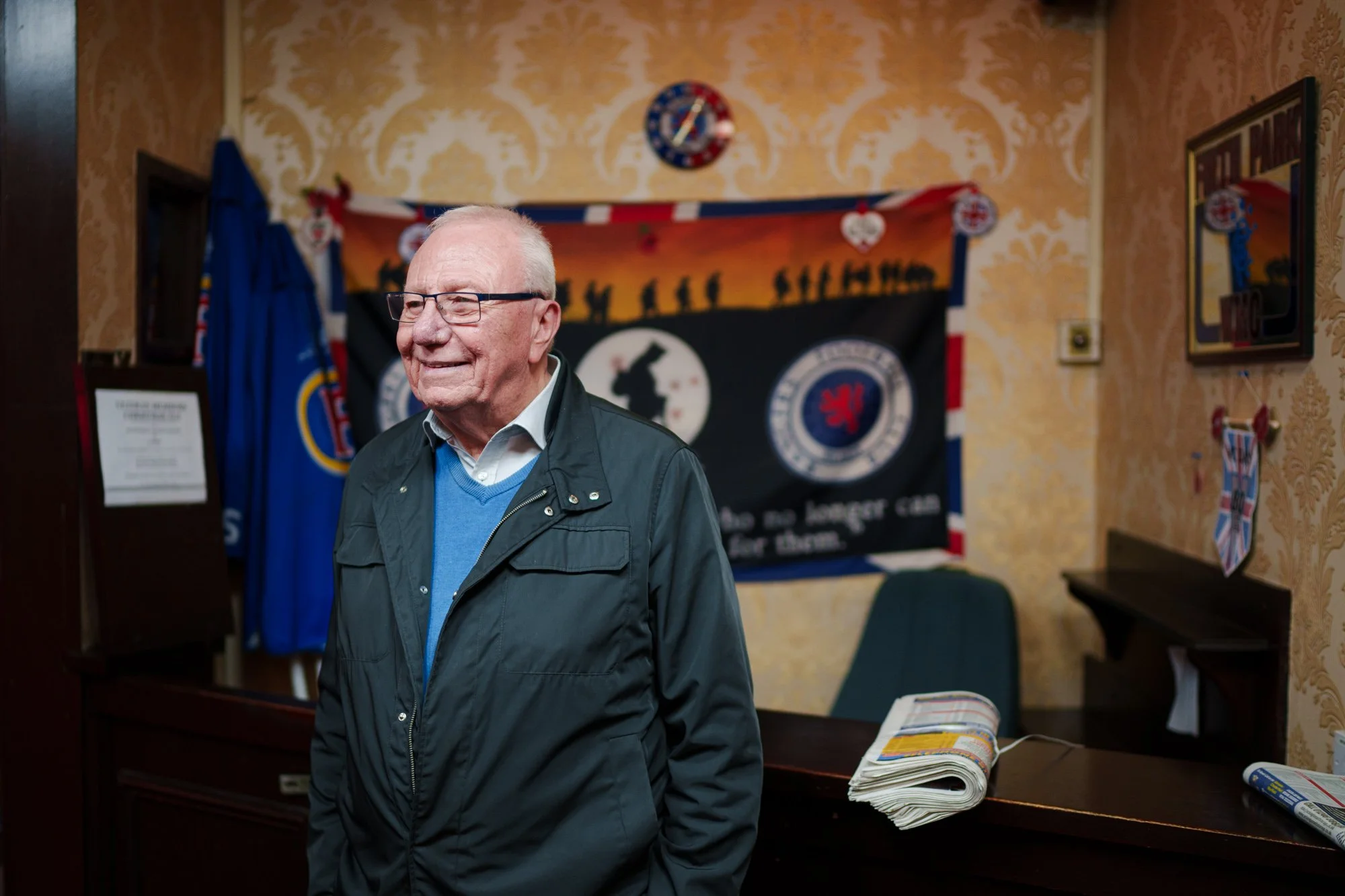
Sadly, Malcolm died in September 2026.