In early summer 2025, I began looking into masculinity in Sheffield — a subject often explored through theory, commentary and nostalgia, but rarely through the voices of the men who lived and laboured here. It didn’t take long to notice a pattern. Much of what I found in archives and libraries was rich in detail yet oddly hollow: accounts about steelworkers rather than from them. Their experiences had been summarised, interpreted, or carefully folded into broader narratives about industry, class and decline.
Only in fragments — like the BBC Radio Ballads, with their raw, almost unpolished testimonies — did the emotional texture of working life break through. Those moments hinted at what the written record largely missed: humour, fear, pride, exhaustion, camaraderie and compromise. It felt like looking at a history whose scaffolding had survived, but whose heart had been edited out.
That absence pushed me out of the archives. If I wanted to understand how masculinity was formed, felt and expressed in Sheffield, I needed to speak to the men themselves — or at least to those still living in the communities shaped by the steel industry’s long shadow. I needed to stand in the spaces where identities were not only discussed but quietly enacted.
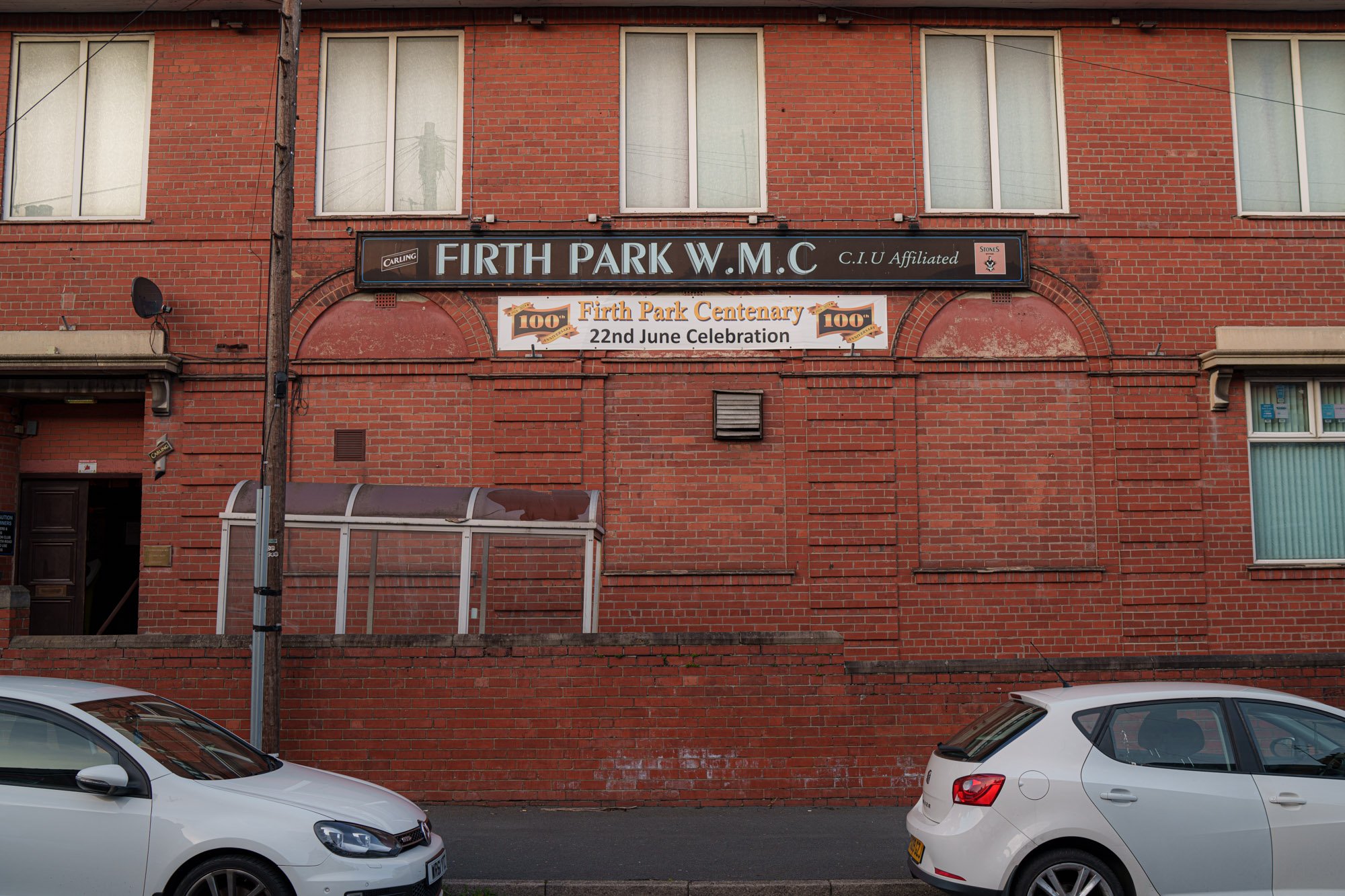
I found some of those answers at Firth Park Working Men’s Club.
One evening, while standing at the bar with David and his wife, Jean, two men walked in with the loose confidence of people who had already been drinking elsewhere. They didn’t pause to take in the room. They moved straight towards the pool table with a kind of unspoken resolve.
Their names were Dean and Ross.
What followed was not the casual pub game it first appeared to be. Ross shrugged off his coat, picked up a cue and began chalking it with the focus of someone returning to an old rivalry.
“I need to win this one,” he said — half a joke, half a confession.
“Dean used to batter me every time.”
Only then did the subtext surface. This was a reunion fifteen years overdue, and the pool table had become a way of lifting a thread they’d dropped long ago.
When I asked if I could photograph them, the response was immediate and familiar: a brief pause, a quick exchange of glances, and that quiet flicker of scepticism working-class men often give to outsiders. Not hostility — more a calculation of intent. Who am I? Why am I here? Do I belong in this space?
It’s an expression I recognised at once. Growing up gay teaches you how to read small shifts in tone and posture, how to weigh the atmosphere before speaking, how to decide which version of yourself a room will allow. In places like this, those instincts return quickly.
Ross
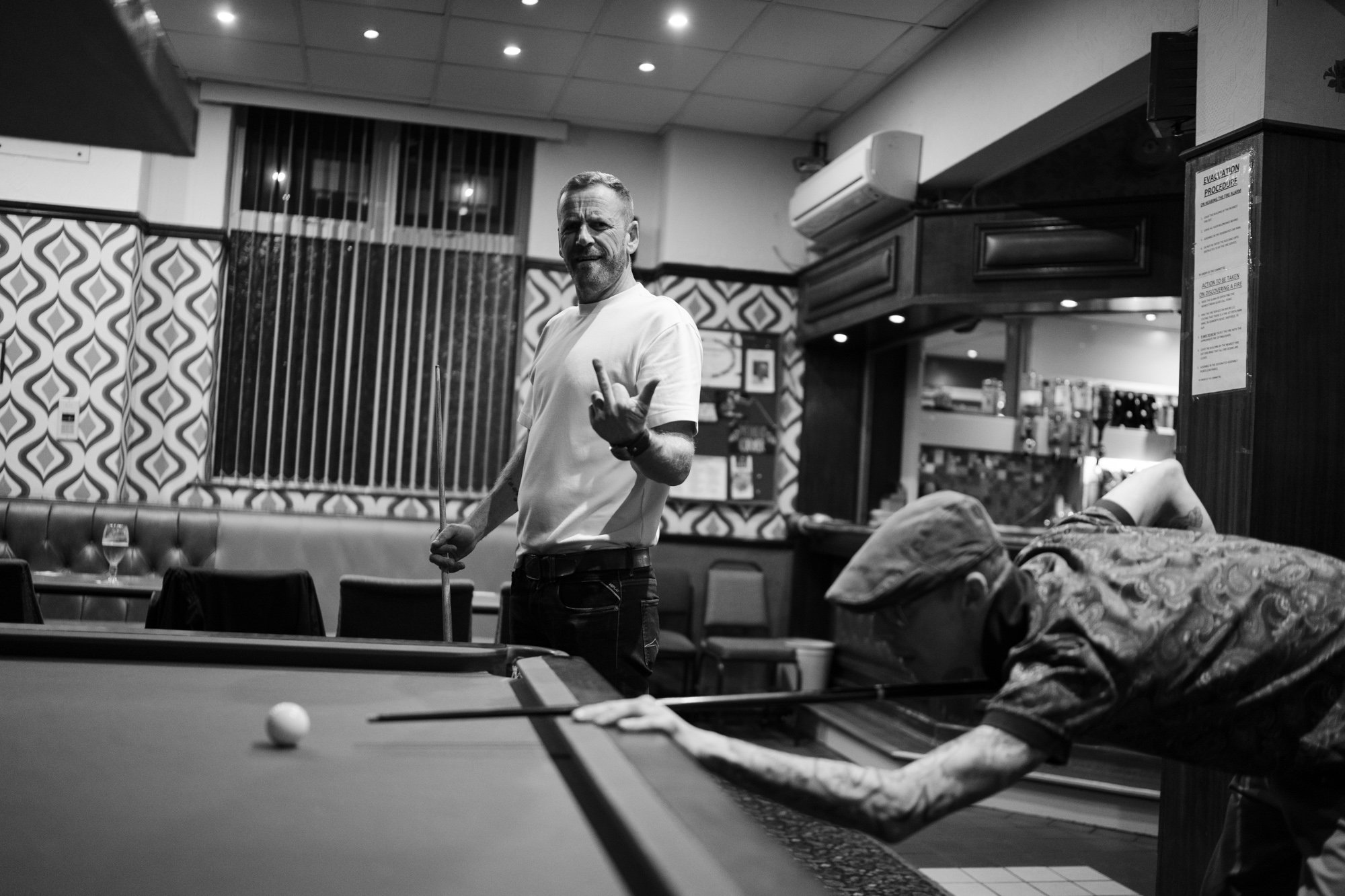
Ross and Dean playing snooker.
As Ross lined up his opening shot — hands slightly tense, voice lower than before — it became clear that the game carried more weight than either of them let on. Pride, memory and friendship were all in play. In that moment, the veneer of banter thinned just enough to reveal something far more telling: how men relate to one another when the social rituals of the club take hold.
This is why I keep returning to Firth Park Working Men’s Club. In scenes like this — mundane yet quietly charged — masculinity becomes visible in all its contradictions: competitive yet affectionate, defensive yet tender, governed as much by silence as by speech. The club has become the anchor for this wider study not because it is unusual, but precisely because it is ordinary. In its rhythms and rituals, it offers an unfiltered portrait of a masculinity rarely captured in official records — lived, unstable, humorous, cautious and deeply tied to place.
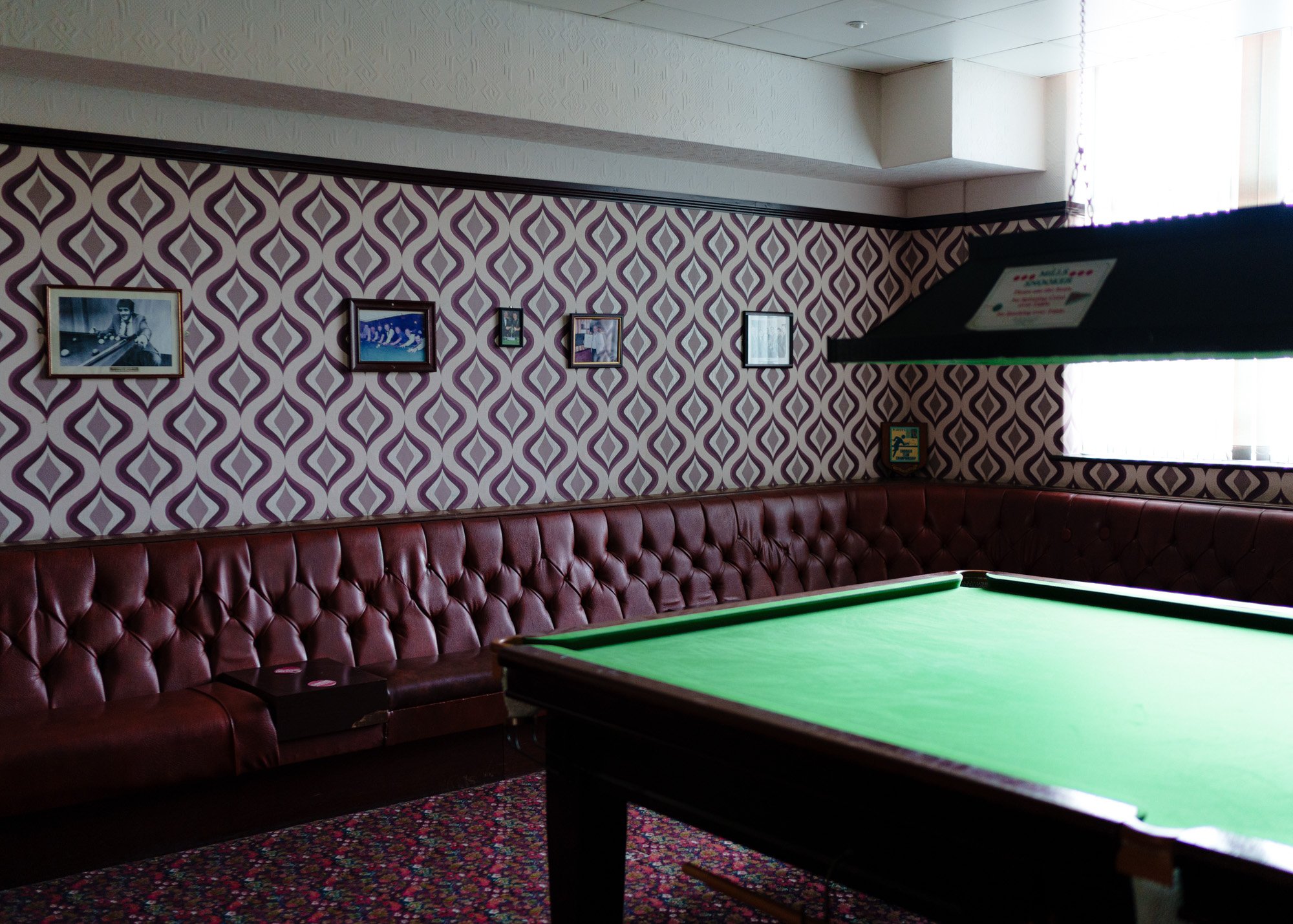
What keeps drawing me back are the subtler dynamics of the room: the way men greet one another with a mix of familiarity and performance; how they talk, how they avoid talking; how lightness is used to bridge awkwardness, and how something heavier occasionally slips through. Often, they reveal more in what they choose not to say.
Firth Park WMC is unusually well-suited to observing this. It’s a place where men fall into long-established roles without thinking. The club becomes a kind of living codebook: who leans on the bar and who keeps to the edges; the quiet hierarchy around the pool table; who buys whose drink; who falls silent when a stranger walks in, and who softens first. Every detail contributes to an evolving picture of how masculinity operates in this space.
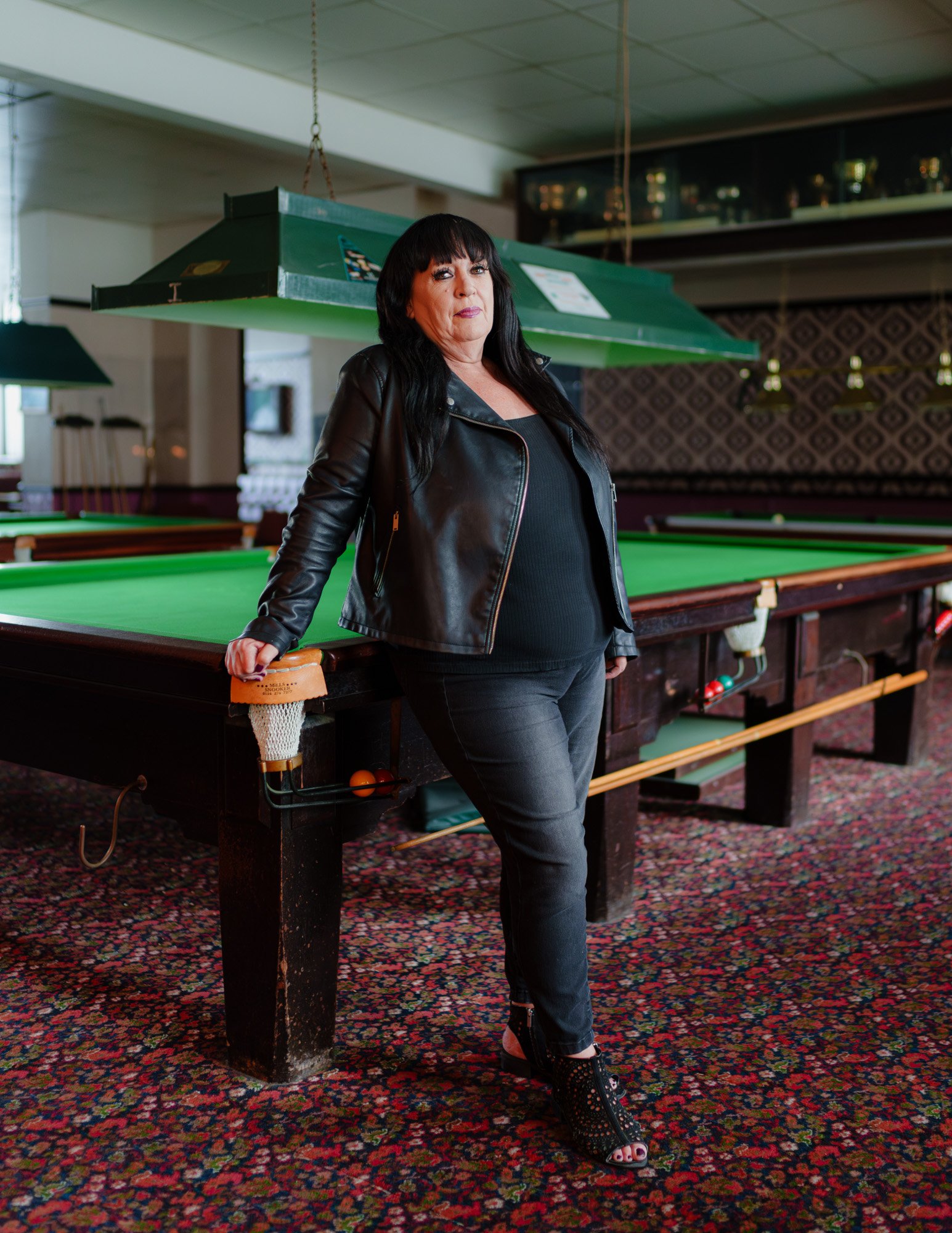
Jean. September 2025
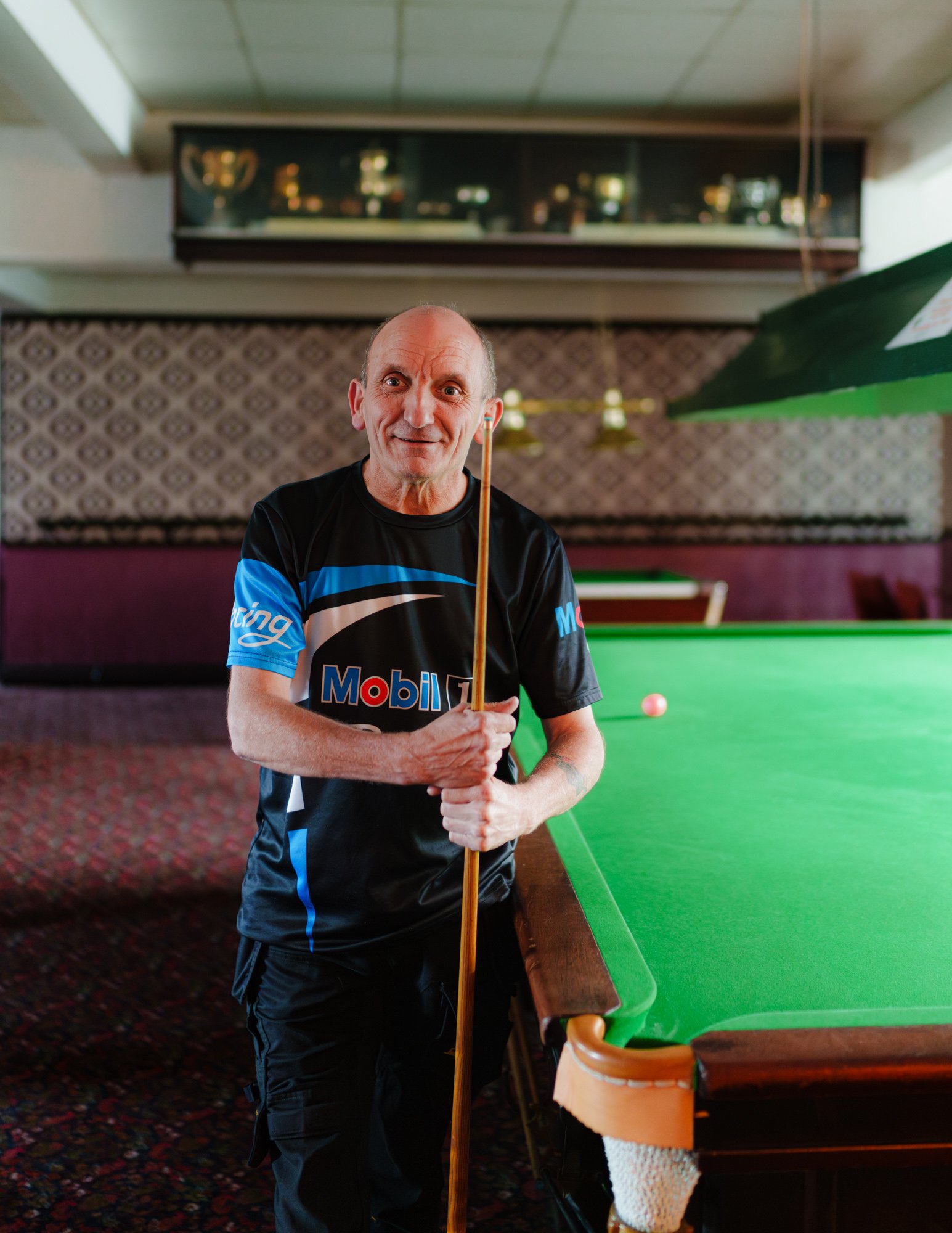
Dave. September 2025
Through the camera, masculinity begins to appear not as a fixed identity but as something fluid, layered and often contradictory — proud yet tired, humorous yet defensive, affectionate yet cautious. Each visit reveals a little more: the way men study each other before opening up; the way humour operates as shield and bridge; the way vulnerability shows itself only in sideways glances or small gestures you’d miss if you weren’t watching.
Photography allows me to sit inside these moments without disturbing them. It is a slow process, and trust accumulates gradually, almost imperceptibly. But that slowness feels essential. In a place like this, you can only understand what you’re seeing by allowing the room — and the men within it — to unfold in their own time.